
Kapur Mahal
The three-bedroom flat of 2500 sq.ft. is located in a late-1930’s building that was one of the first to be built in the Art Deco precinct of Marine Drive.
With generous heights and room sizes, this is home to a senior couple and their house help. The focus of our efforts has been to resolve the planning, maximizing openness, daylight penetration and space utilization. These were carried out with respectful nods to the Art Deco context, with an end result that belongs firmly in its own time.
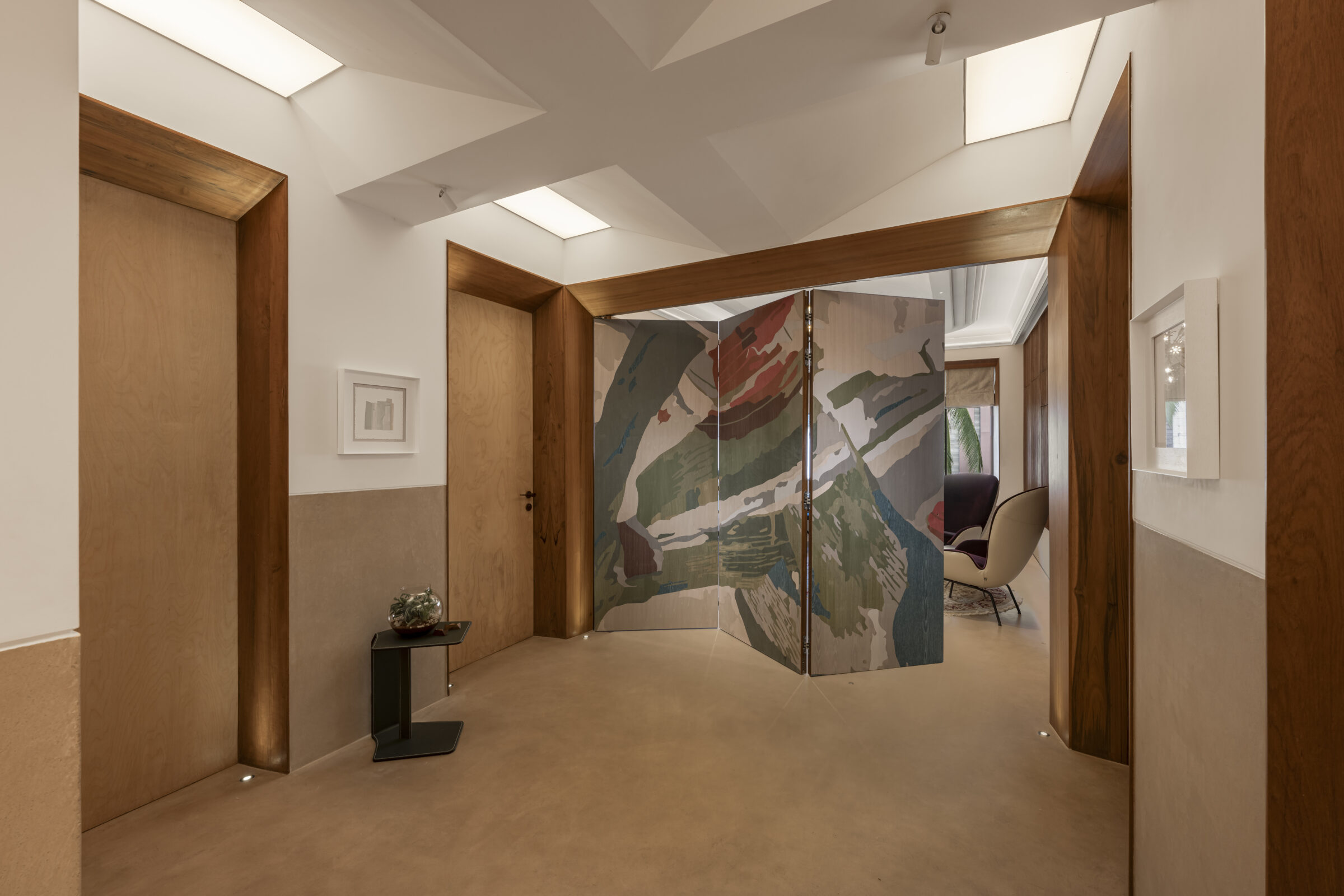
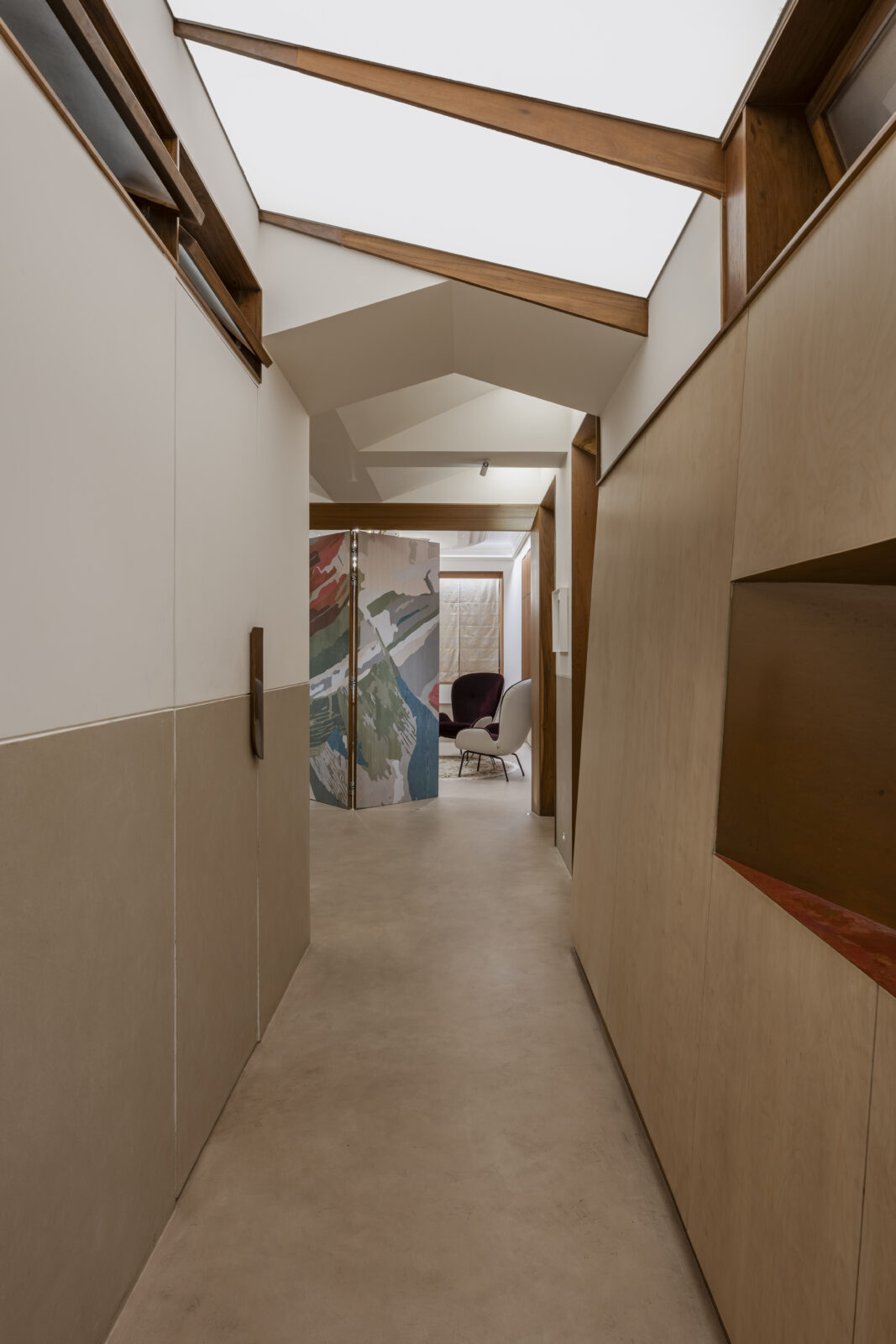
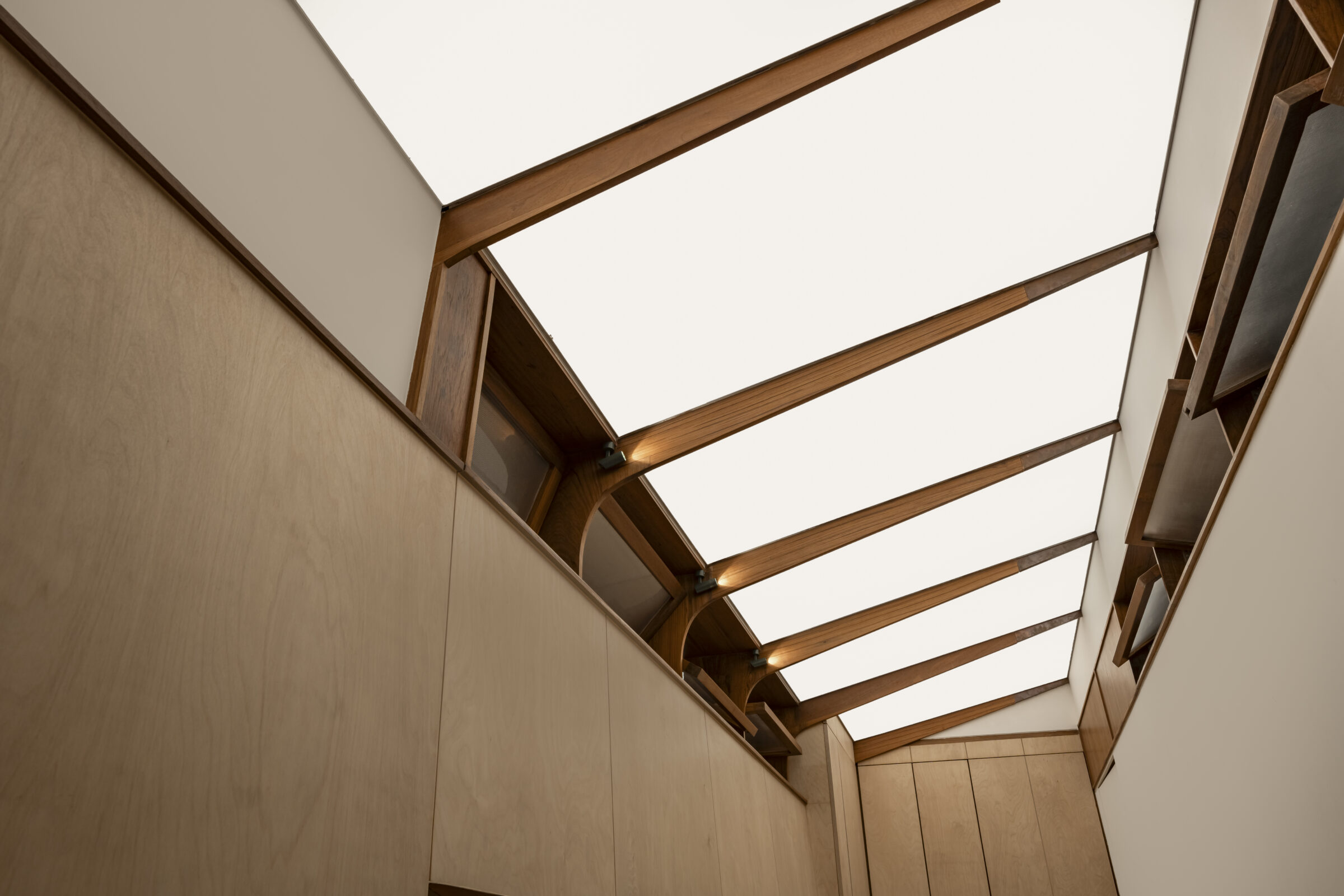
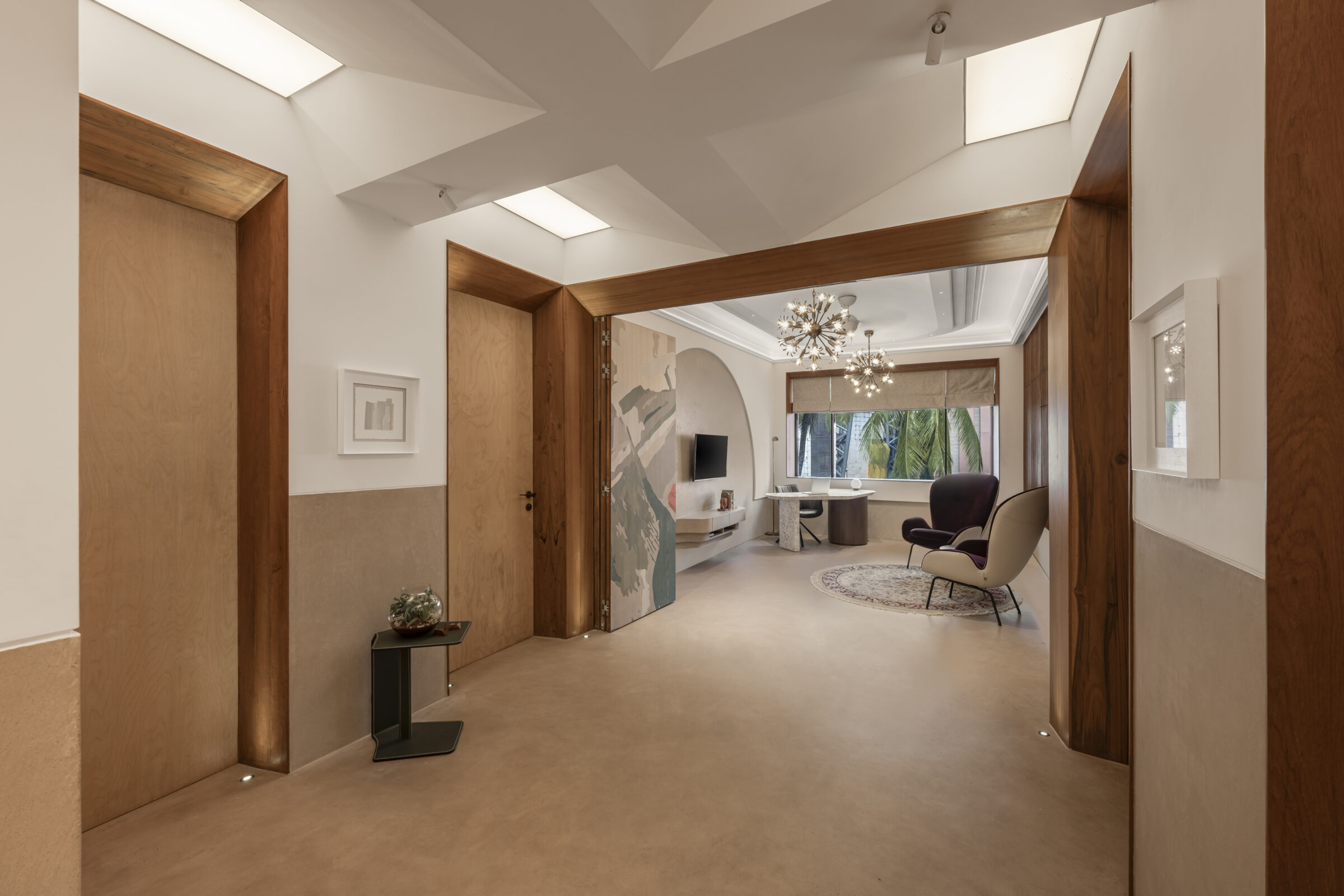
The entrance passage is typical to apartments of this type, that is to say: long and largely lightless save for what had once been high-level “roshandaan” ventilators. We concealed doors to the kitchen and staff areas along one wall, where sand coloured concrete microtopping continues from the floor up to wainscoting height. The passage ends in an internal lobby, from which the rest of the house is accessed. The passage and lobby had been dreary and received almost no daylight. We addressed this by reinstating and extending the original “roshandaans” with operable ventilator windows along both walls, which allows for daylight and cross-ventilation all along the passage. Slim tapering timber members divide backlit stretched fabric ceiling panels, which seem like roof apertures bringing in notional daylight from above. A chamfered niche is carved out and clad with oxidized copper, borrowing real daylight from the living room through a fluted glass screen. The square lobby ceiling was divided by a downstand beam, which led to a ceiling design of four square chamfered “skylights”. The internal walls are nearly a foot thick, and the chamfered design of the timber door jambs highlights this while complimenting the ceiling.
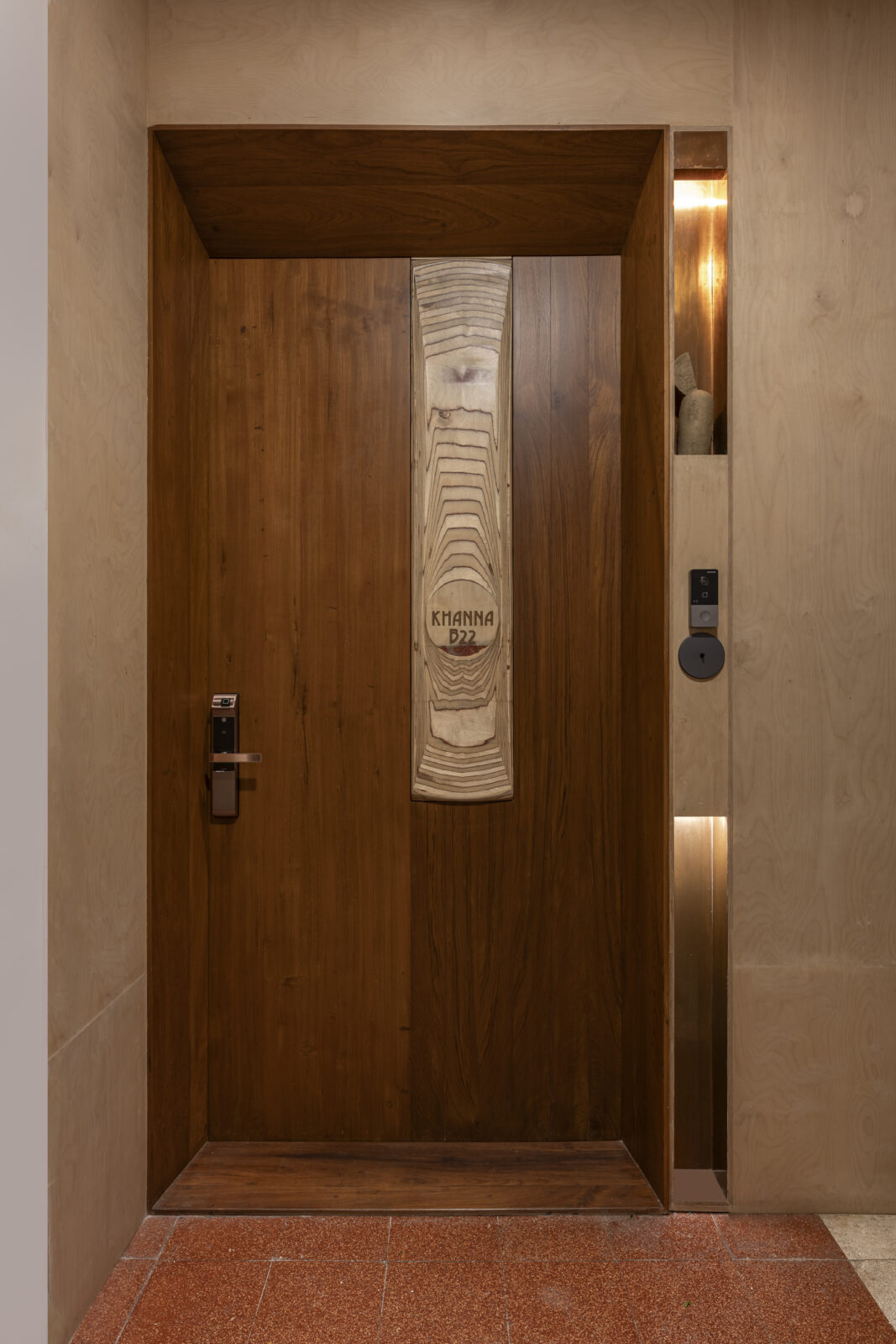
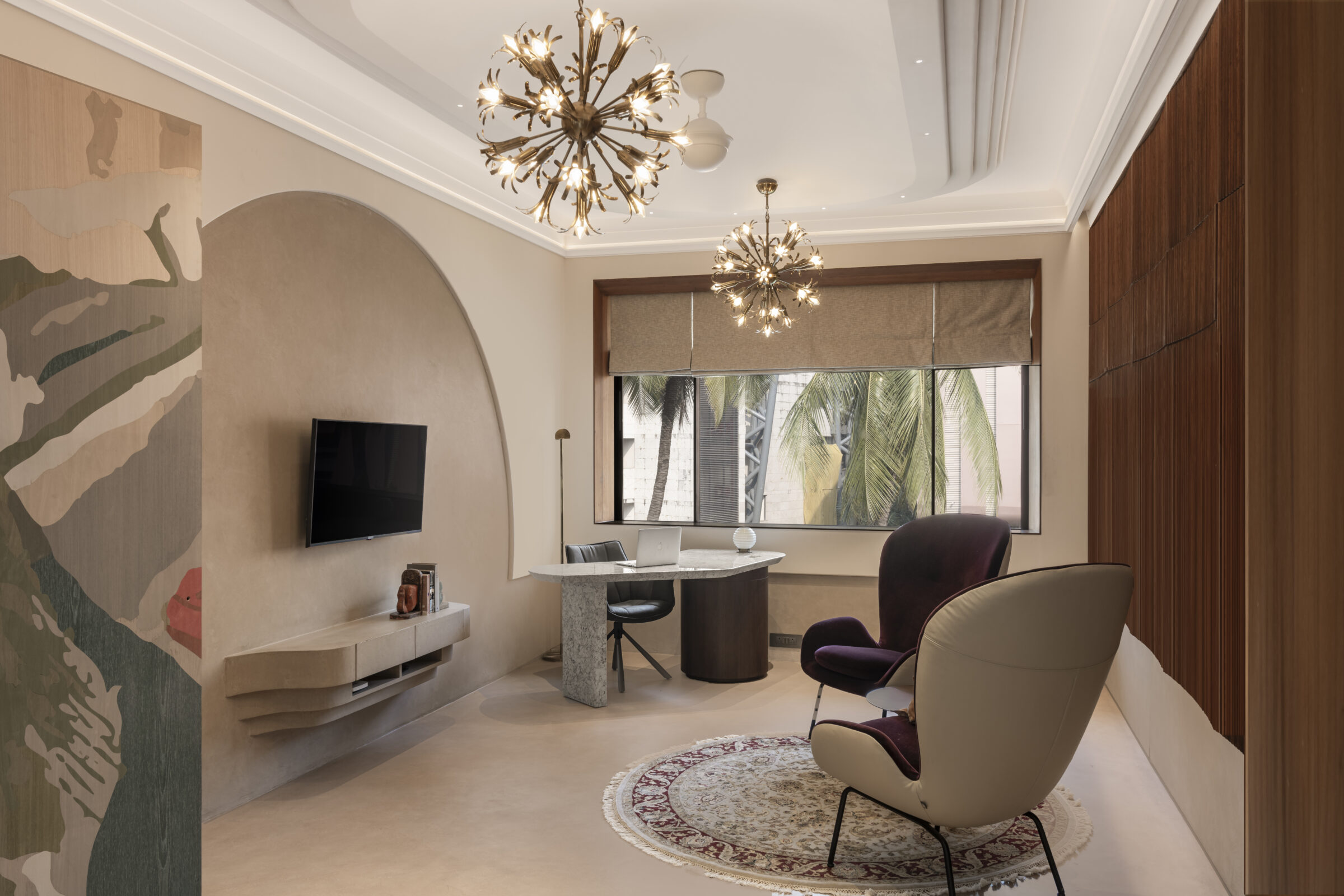
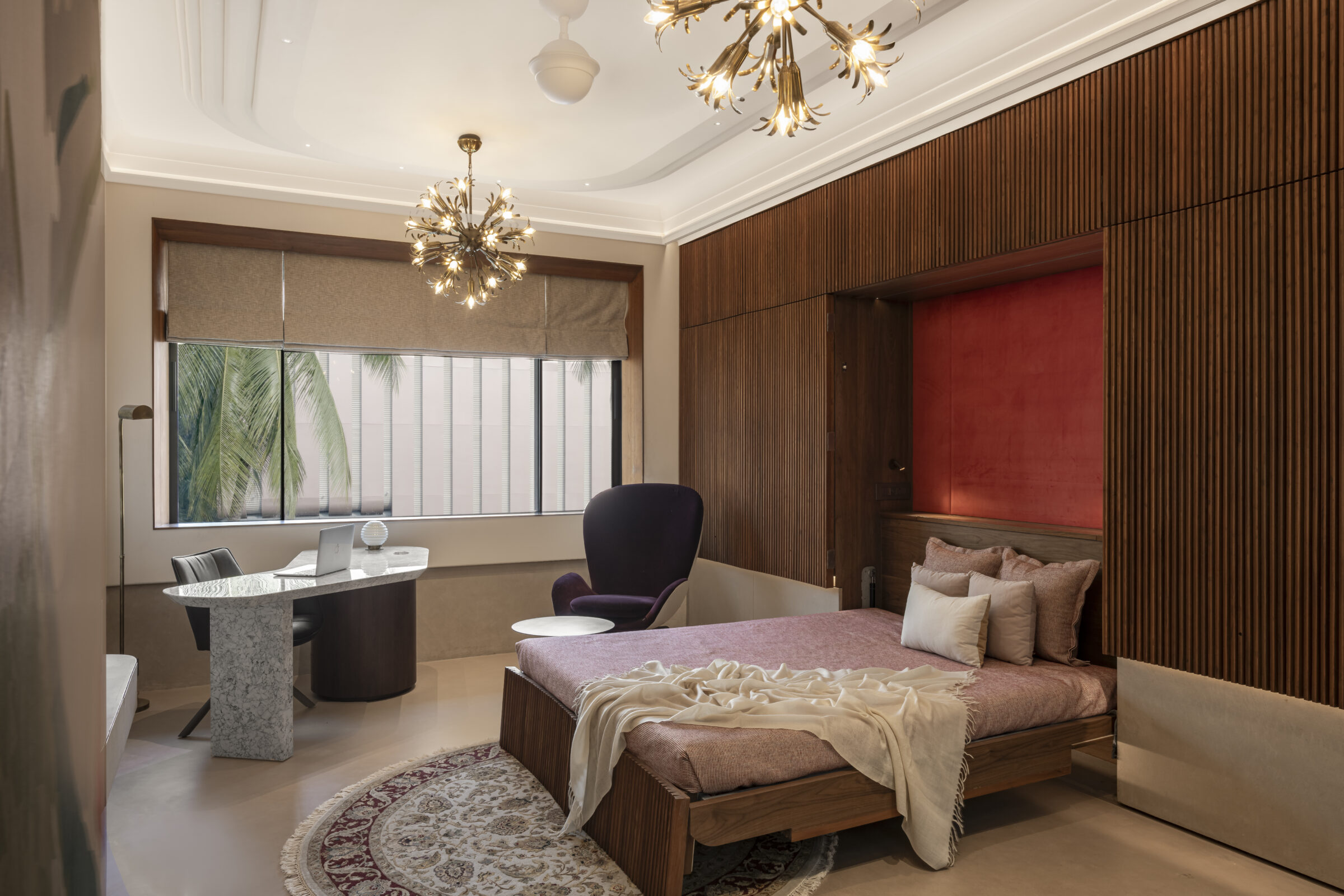
The middle bedroom is rarely used as one, and has therefore been conceived as a study/ lounge space, with doors that fold away to open this almost as an extension of the lobby. In this way, right from the entrance to the flat, one is greeted by a long view of a large window framing palm fronds through which the morning sunlight streams in. Once again, a device to maximize openness and bring in daylight into the interior of the plan. A sculptural boomerang-shaped study table occupies the far corner of the room. Custom carved fluted teak paneling along one wall conceals wardrobes with overhead storage and a drop-down bed that is deployed when required. Below, the concrete floor of the passage and lobby continues into the room and up the walls at low level. The original cornice along the periphery of the room is reinstated, and the capsule shaped tiered ceiling is decidedly art-deco. The three room doors fold shut to present the lobby and entrance with a custom artwork in an abstract marquetry of varying species of dyed and stained veneers.
The guest bathroom is accessed directly off the lobby and continues the aesthetic of this area, with floor and walls finished almost completely in seamless microtopping, featuring softly lit niches and the same chamfered “skylights” as the space outside.
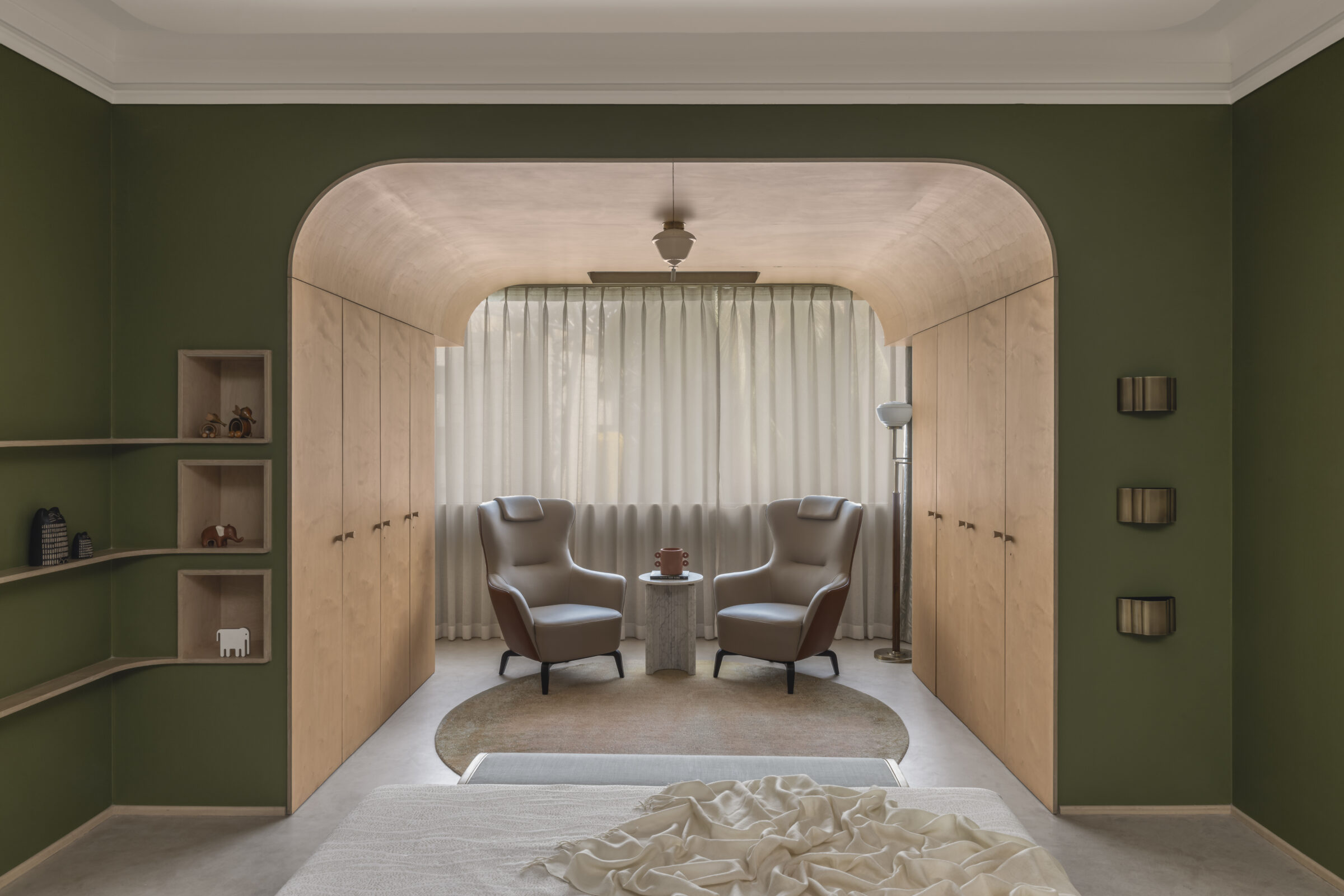
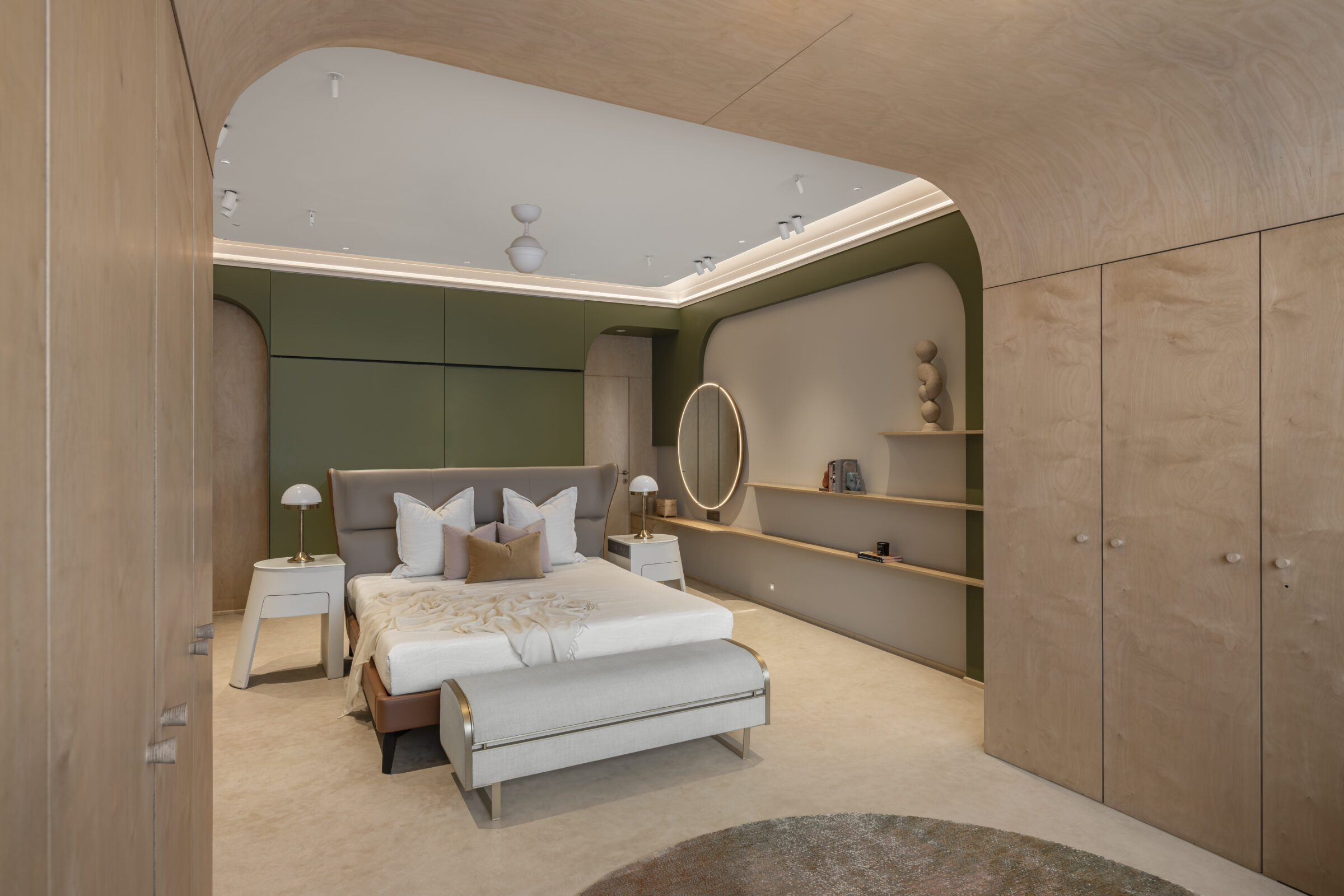
The second guest bedroom featured a large balcony that was mainly used for storage. The wall between the room and the balcony was completely dismantled to make it part of the room as a lounge. The leather-clad island bed in the centre serves as a space divider, with the wardrobe area behind in discreet sliding shutters of olive green. Here too, the original cornice is reinstated, with the central portion curving gently down. The olive green continues across columns and beams and framing the walls within.
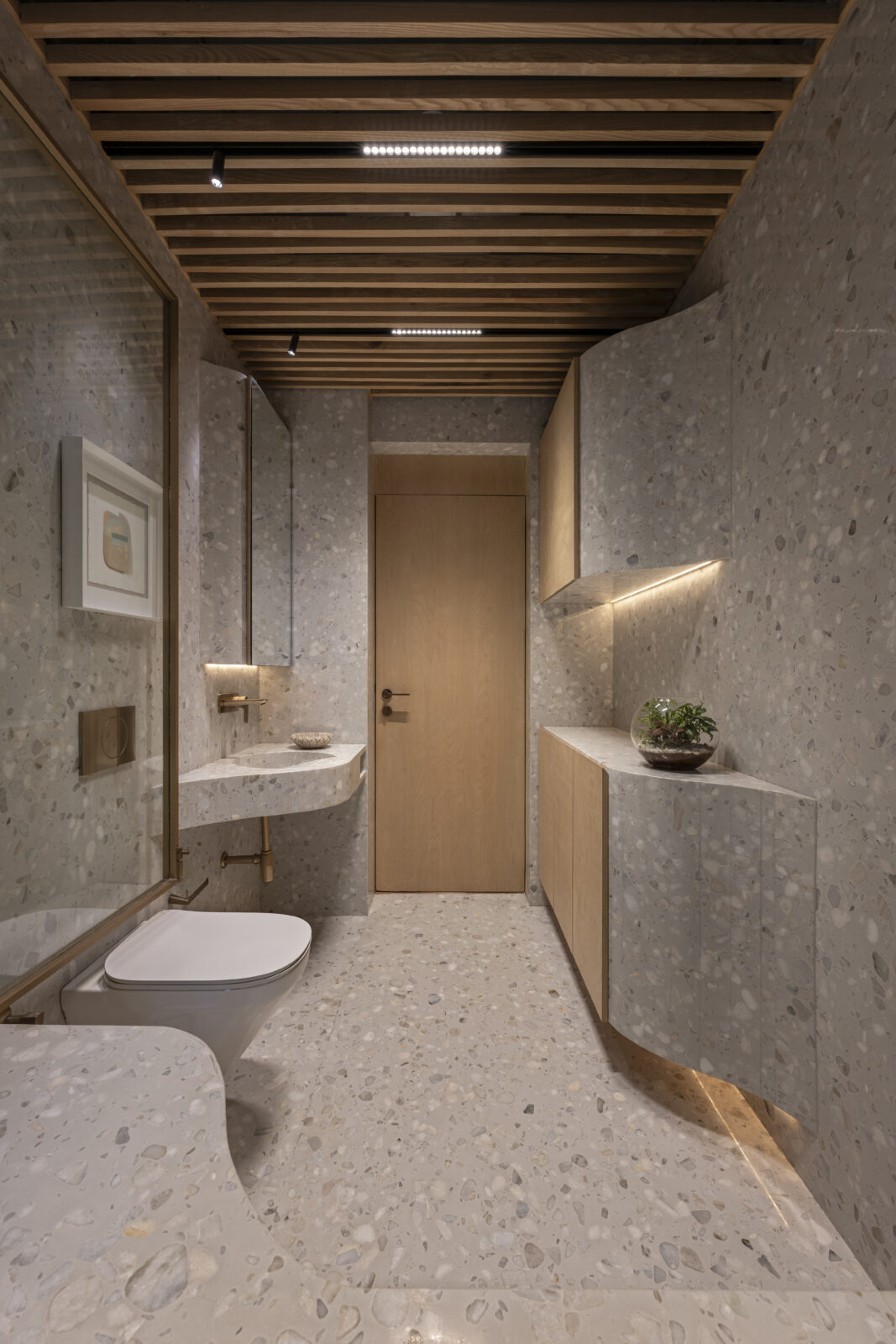
The ensuite bathroom to the second guest room is a study in terrazzo quartz, featuring a built-in jacuzzi and a custom washbasin. The semi-open ceiling is formed of slats of oak, allowing for lighting and services to be concealed behind and within. Again, niches are deployed strategically to function as storage, display and even handrail, all with strategic indirect linear lighting.
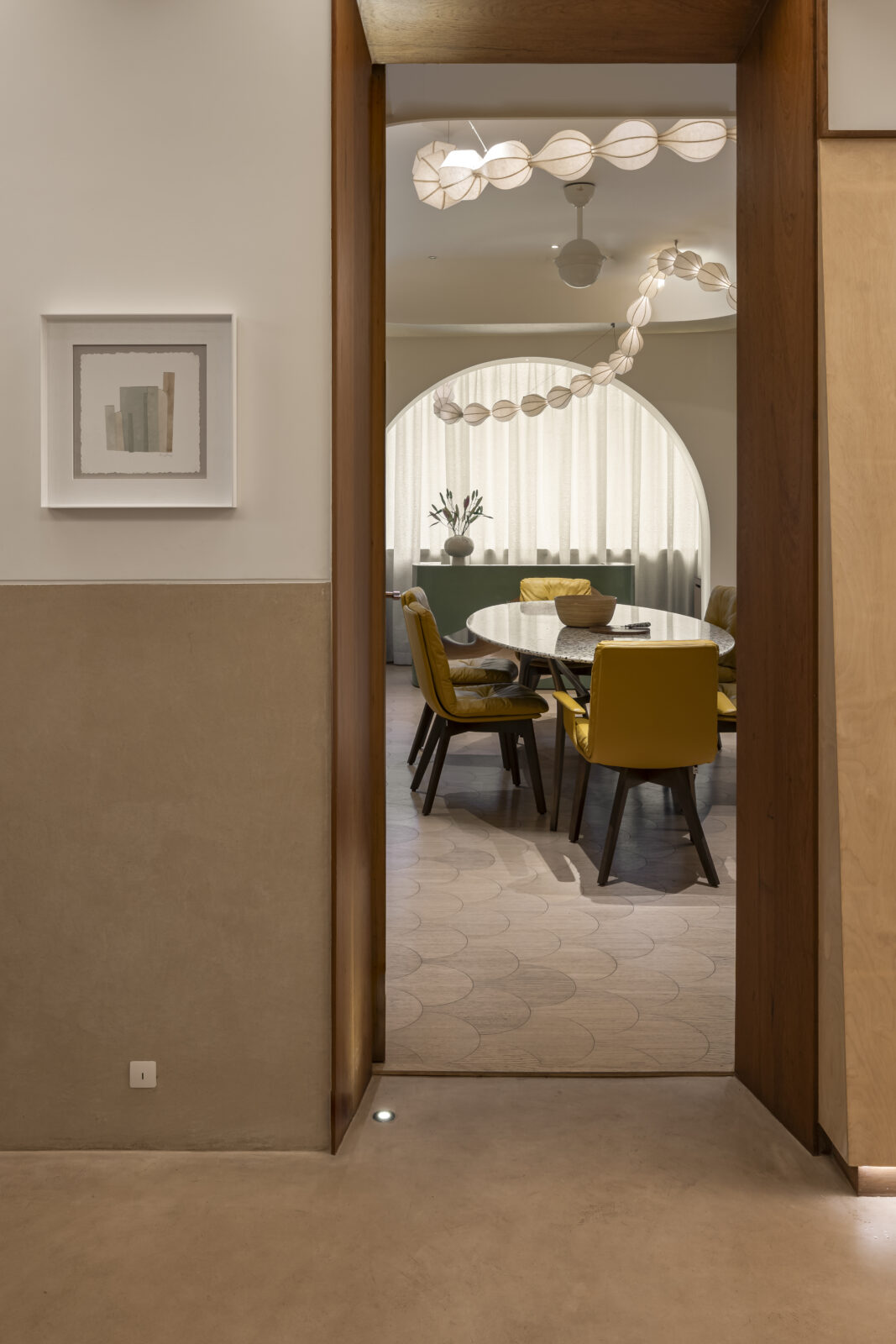
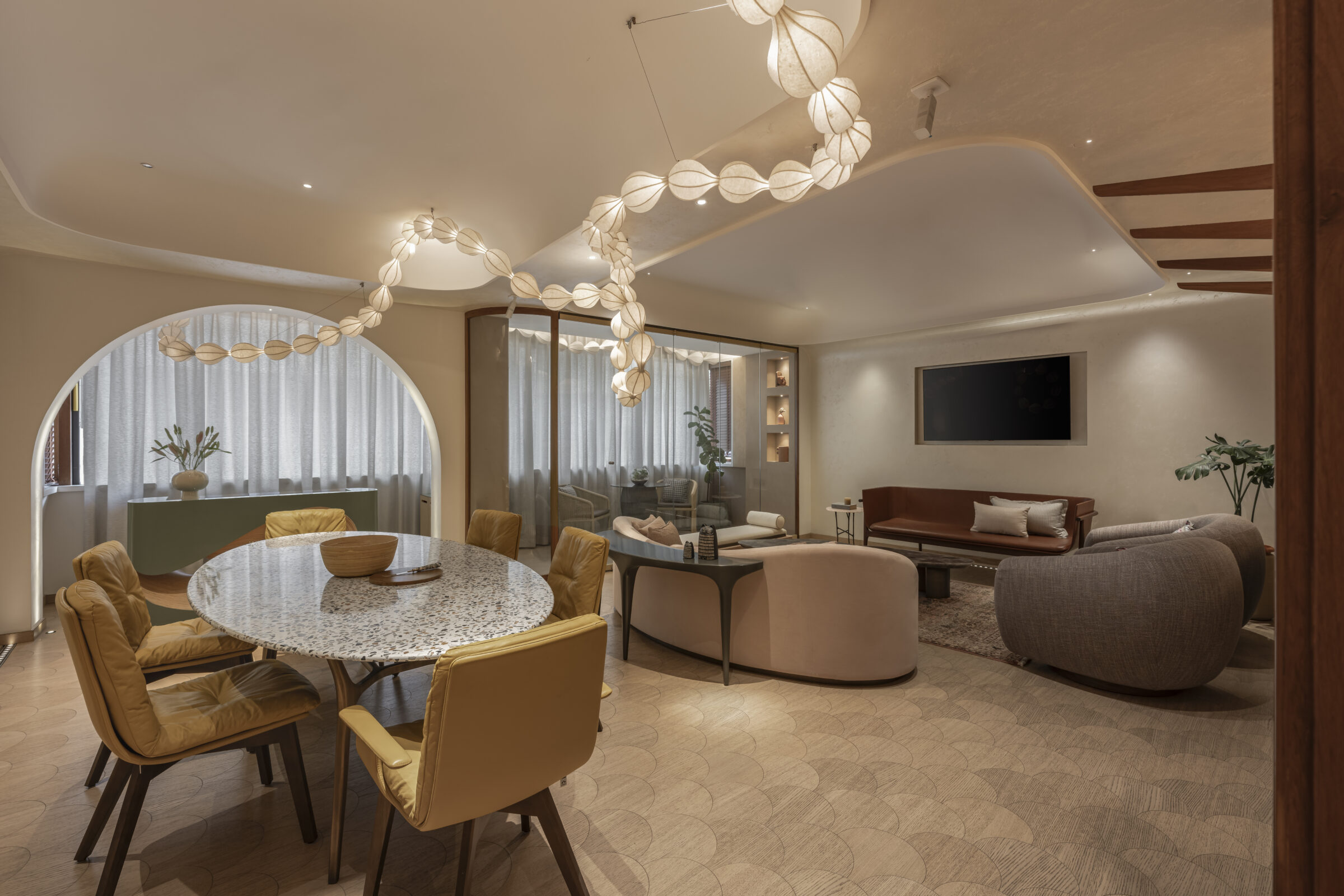
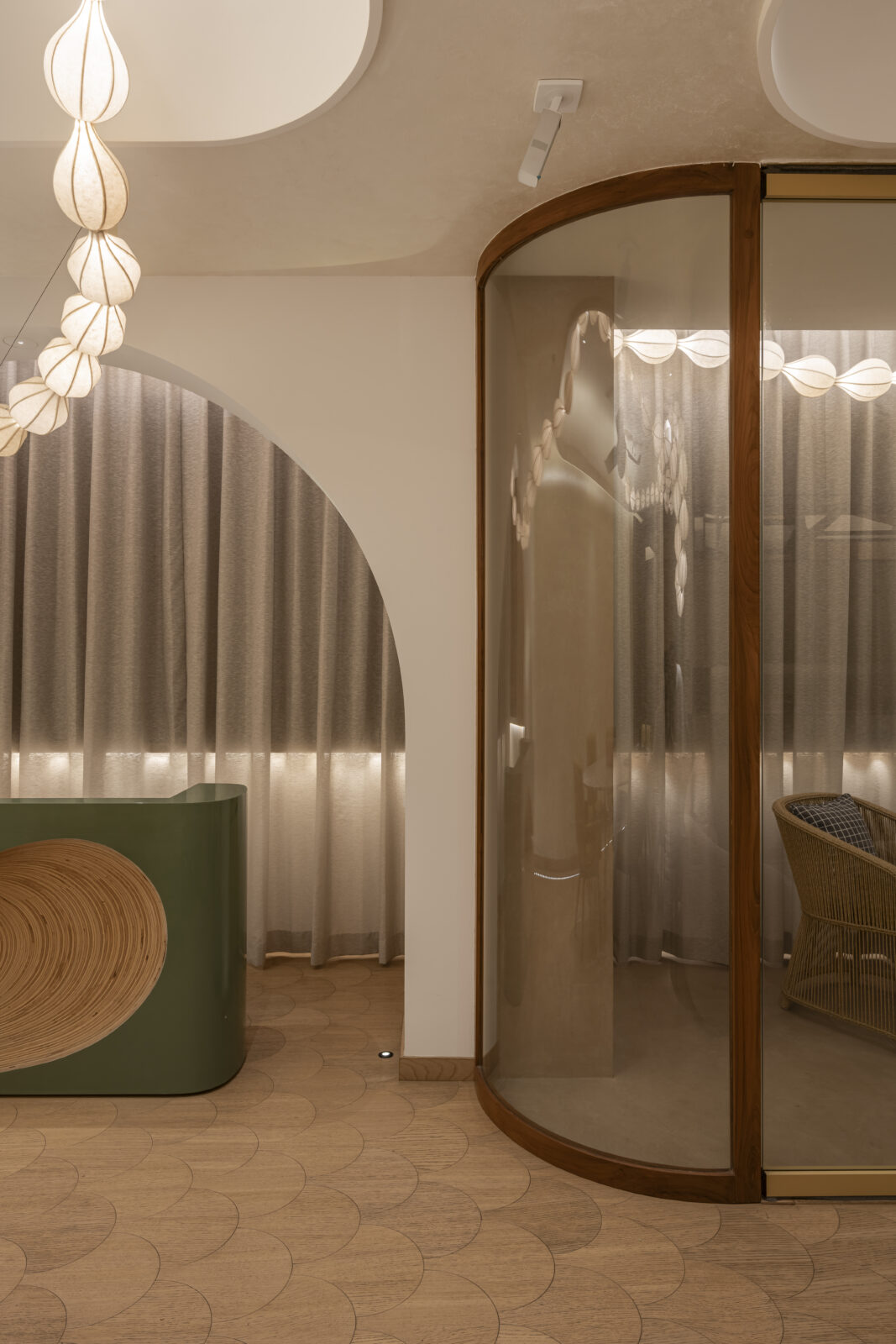
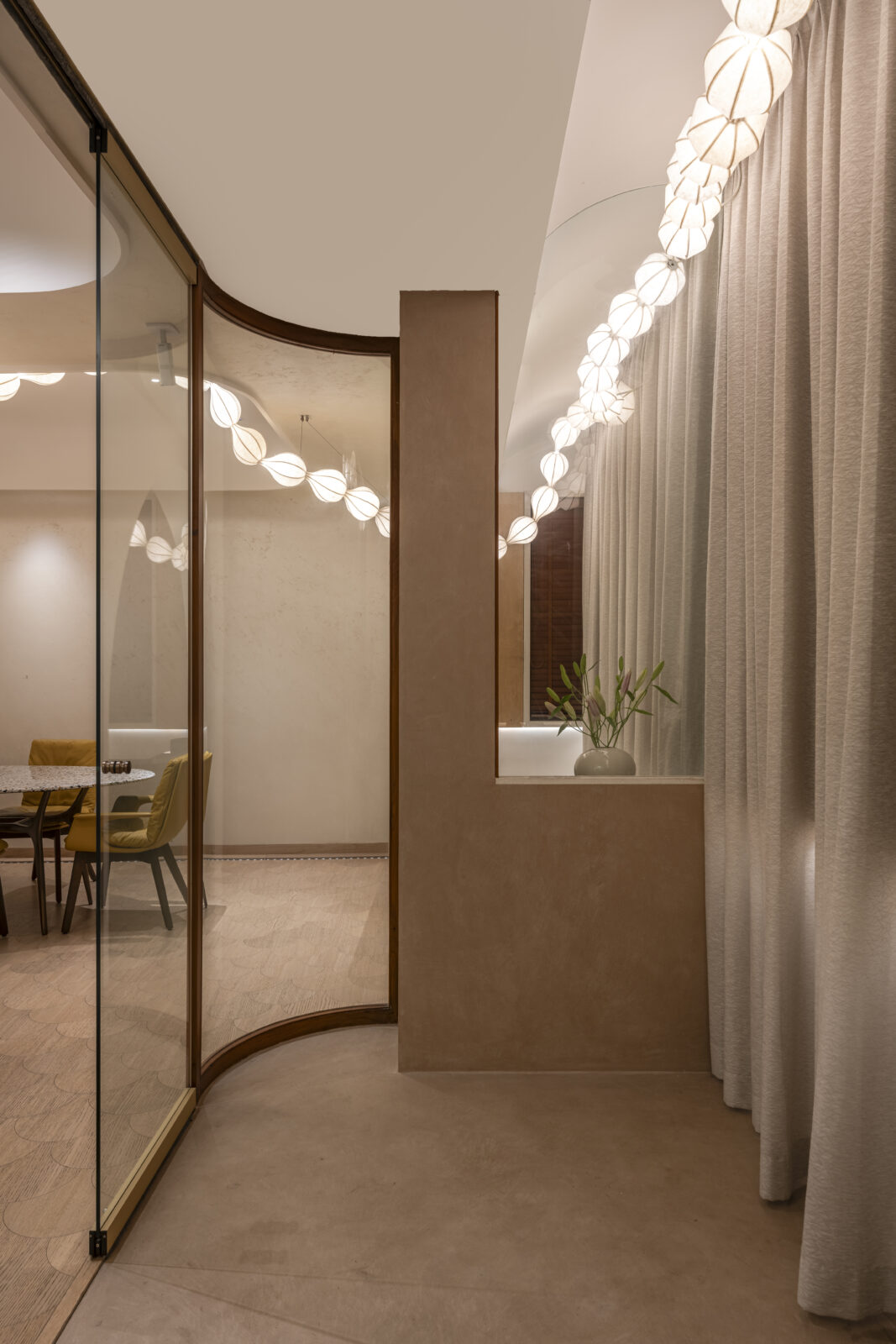
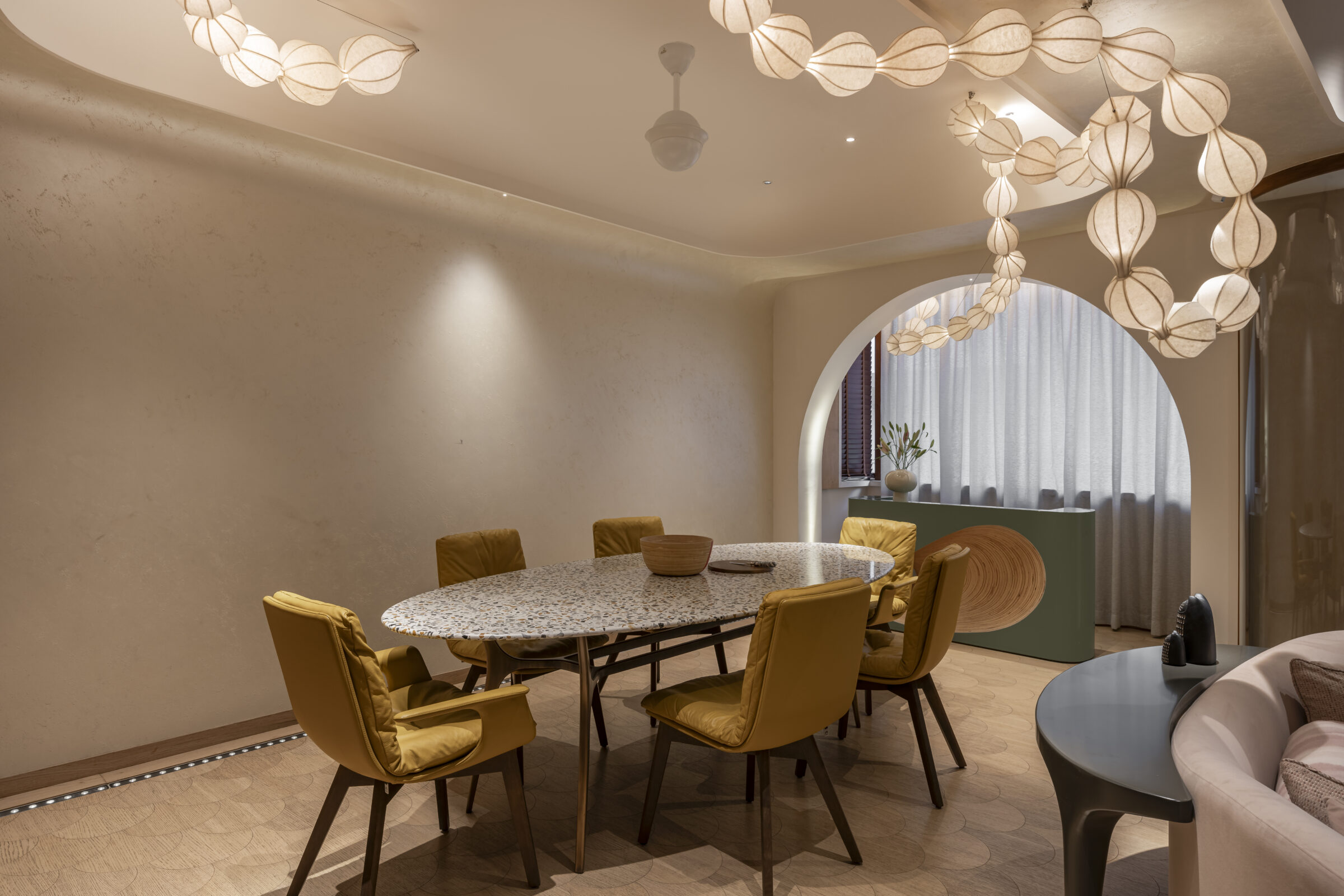
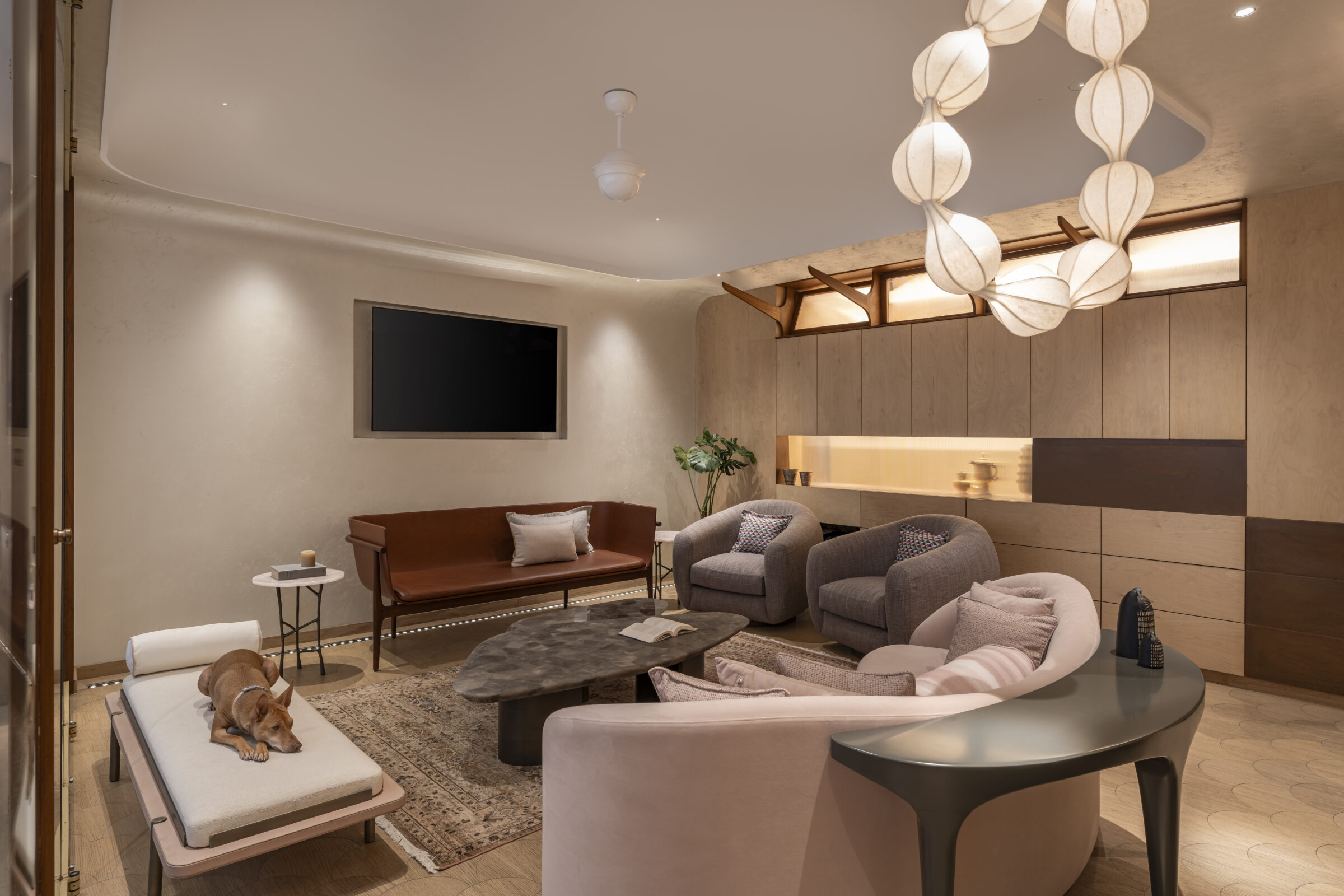
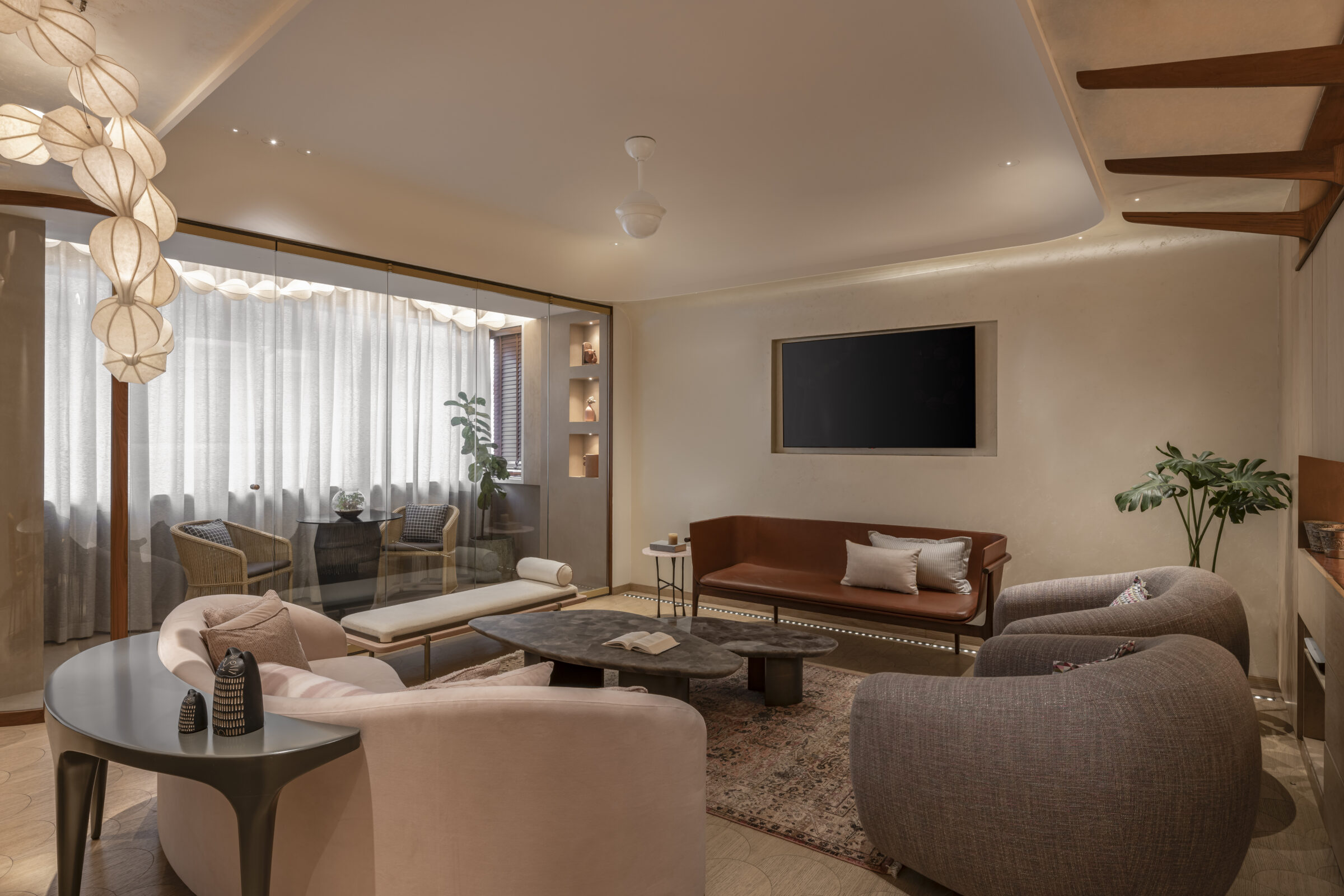
The living and dining room was fronted by a full-length balcony which was only 3 feet deep, as a result being used primarily for the drying of clothes. This balcony faced the neighbouring building with only a sliver of sea view. Keeping the carpet area the same, we halved the length and doubled the depth, resulting in a proportion of space that is much more usable, and is separated from the main interior area by a frameless folding glass partition. The flooring is in engineered silver oak of a very particular interlocking scallop pattern. The bar is a sculptural talking point in bottle green, and occupies pride of place under an arch at the end of the dining area. The dining table has a terrazzo top on slender bronze legs and is surrounded by chairs in a mustard leather. The end walls are rendered in a subtle texture that is brought out by recessed in-ground grazers and turns seamlessly on the ceiling, which is punctuated by two large scoops or bowls to maximise height.
Design Team: Pravir Sethi, Chintan Zalavadiya
Lighting design: Tripti Sahni/ studio Trace