
The house between the sea
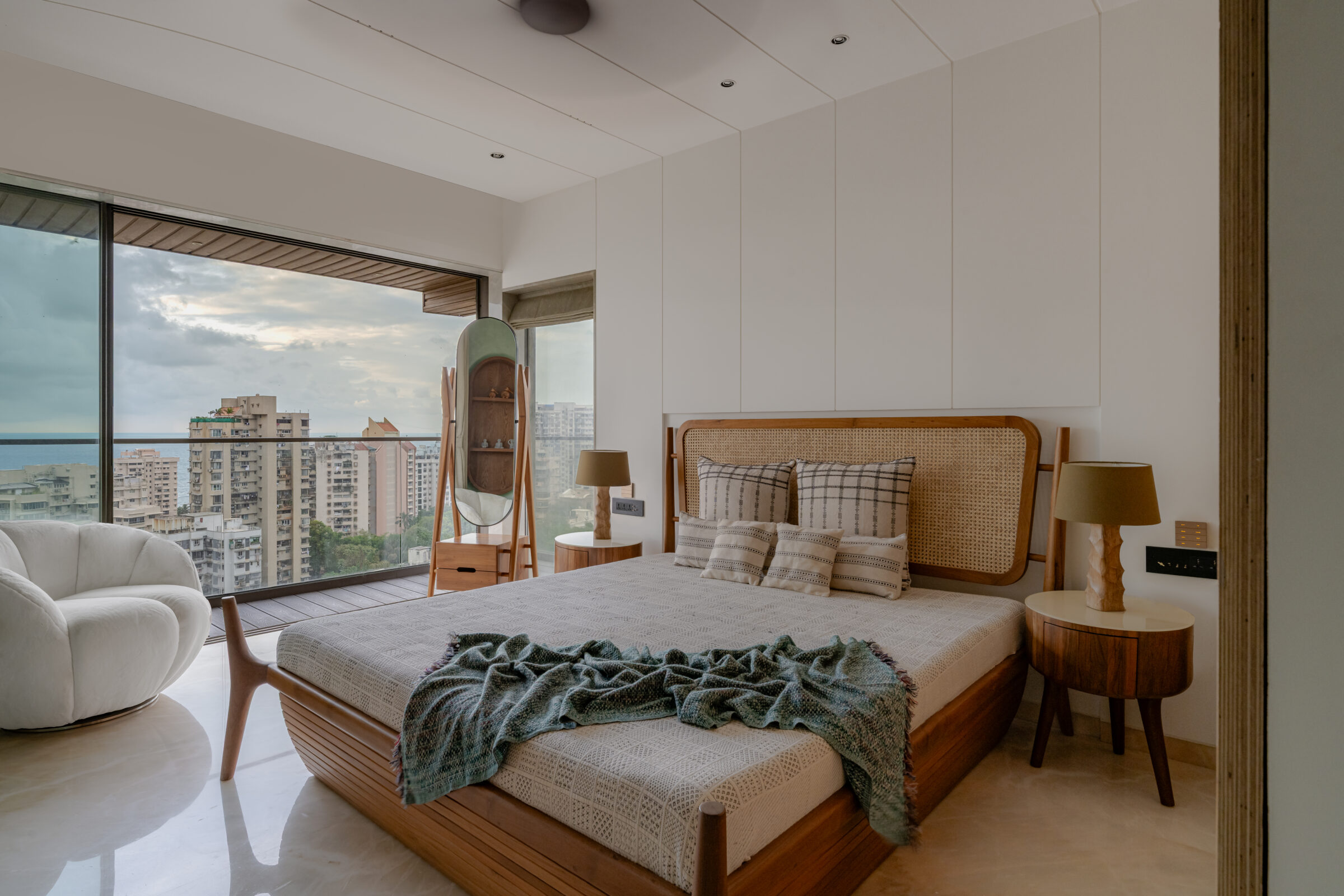
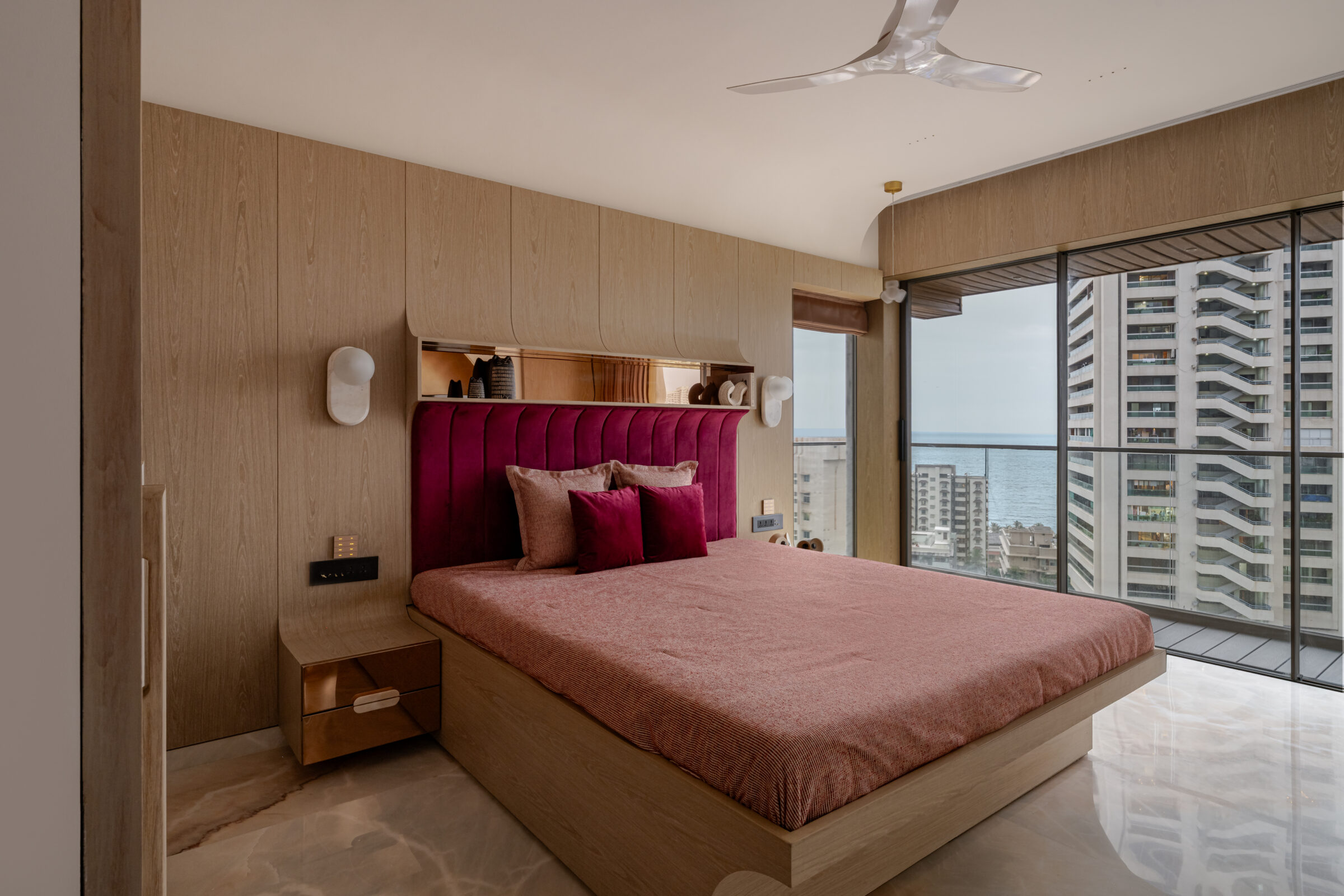
This four-bedroom 2500 sq.ft. flat is located in a relatively new building in South Bombay that offers views over the sea on both sides– the openness of the Arabian Sea to the west and the Back Bay and Chowpatty Beach to the east.
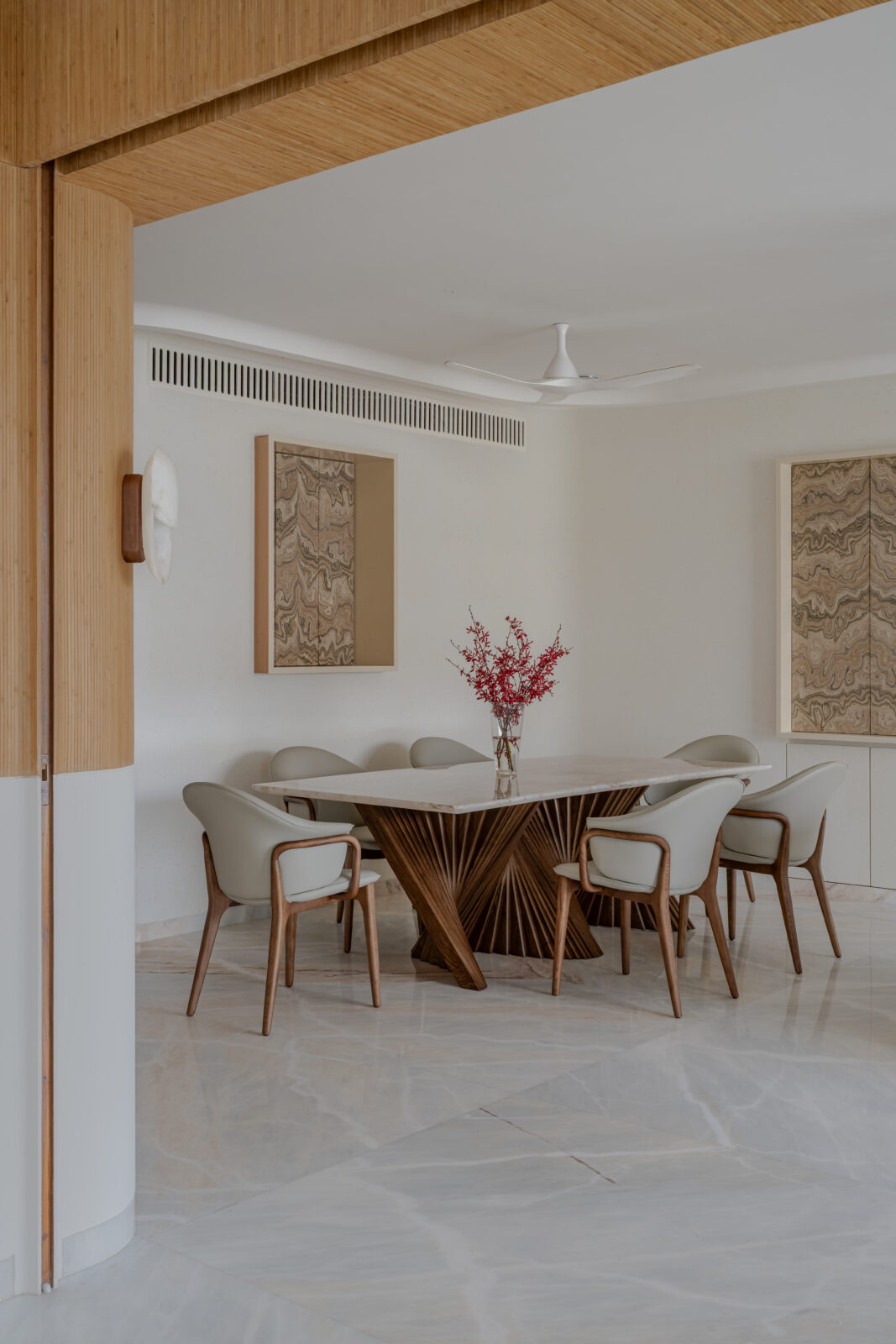
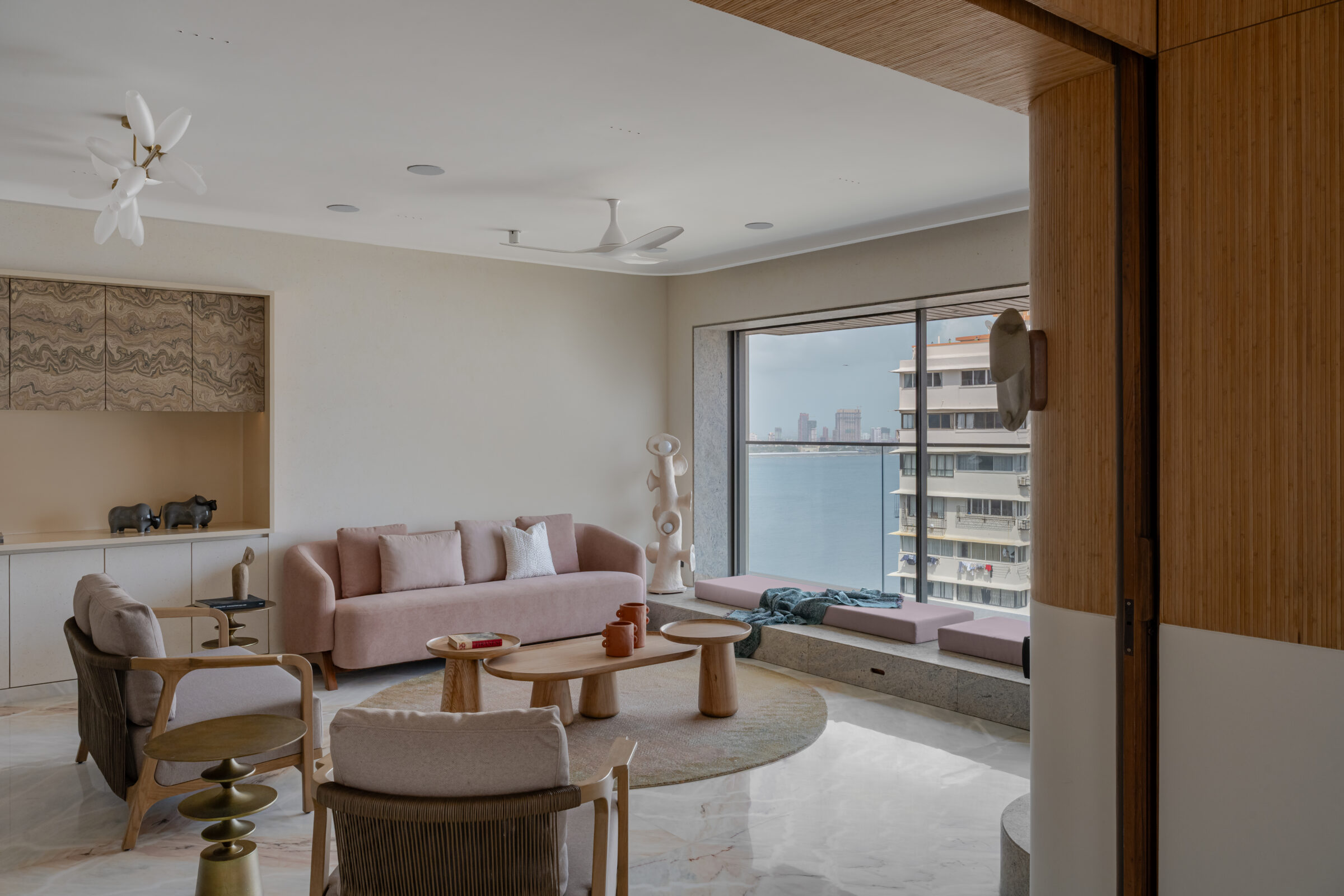
Being home to an empty-nester couple in their 50s, the abundance of space allowed us to explore ways of opening up the plan, catering largely to maximize space in the daily use for just the two of them, while providing variable solutions to cater for more residents as needed. The focus of our efforts has been to resolve the planning, providing more openness, daylight penetration and flexible space utilization. These motives are realised through contemporary design, using a warm palette of natural materials such as sisal, bamboo and wood.
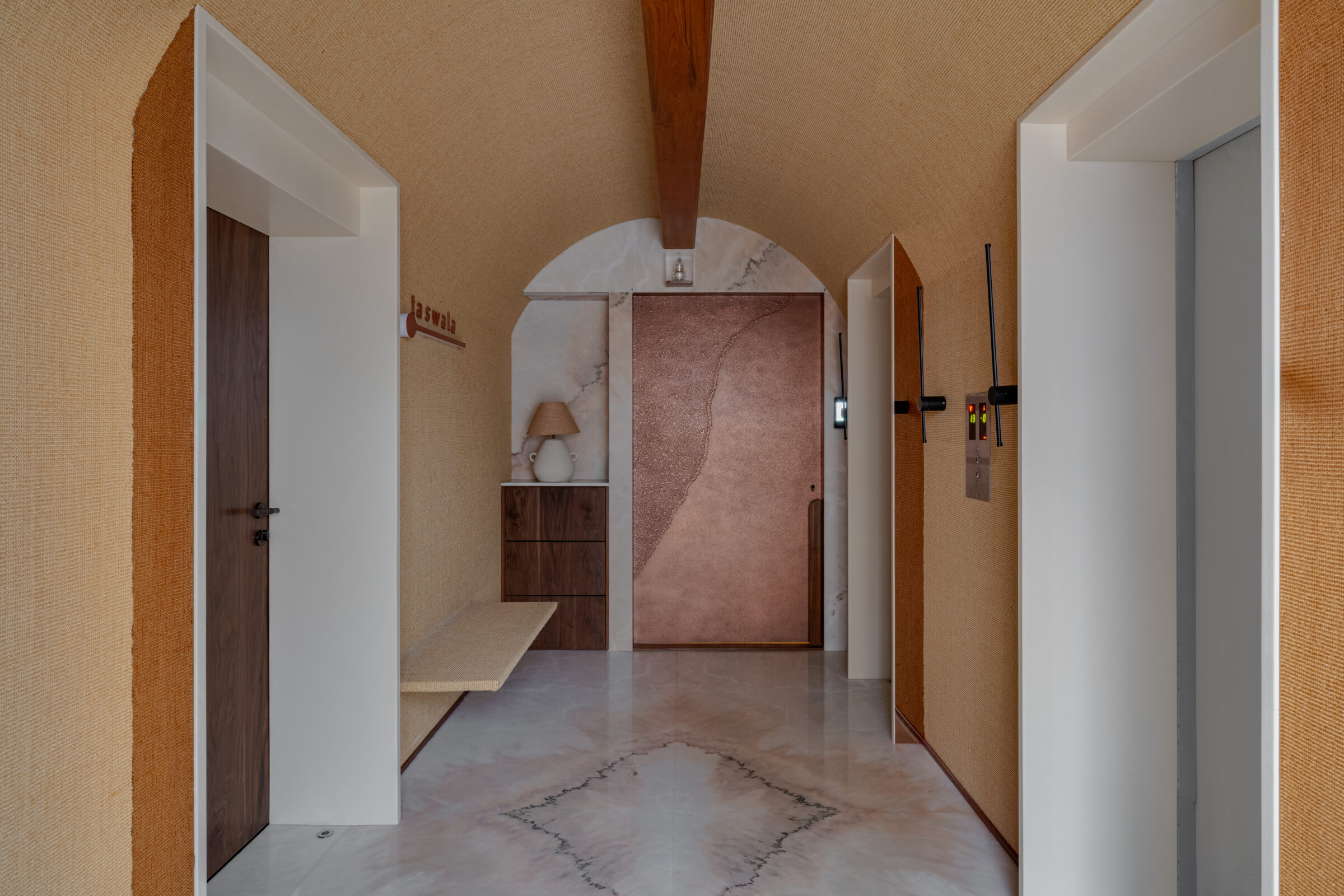
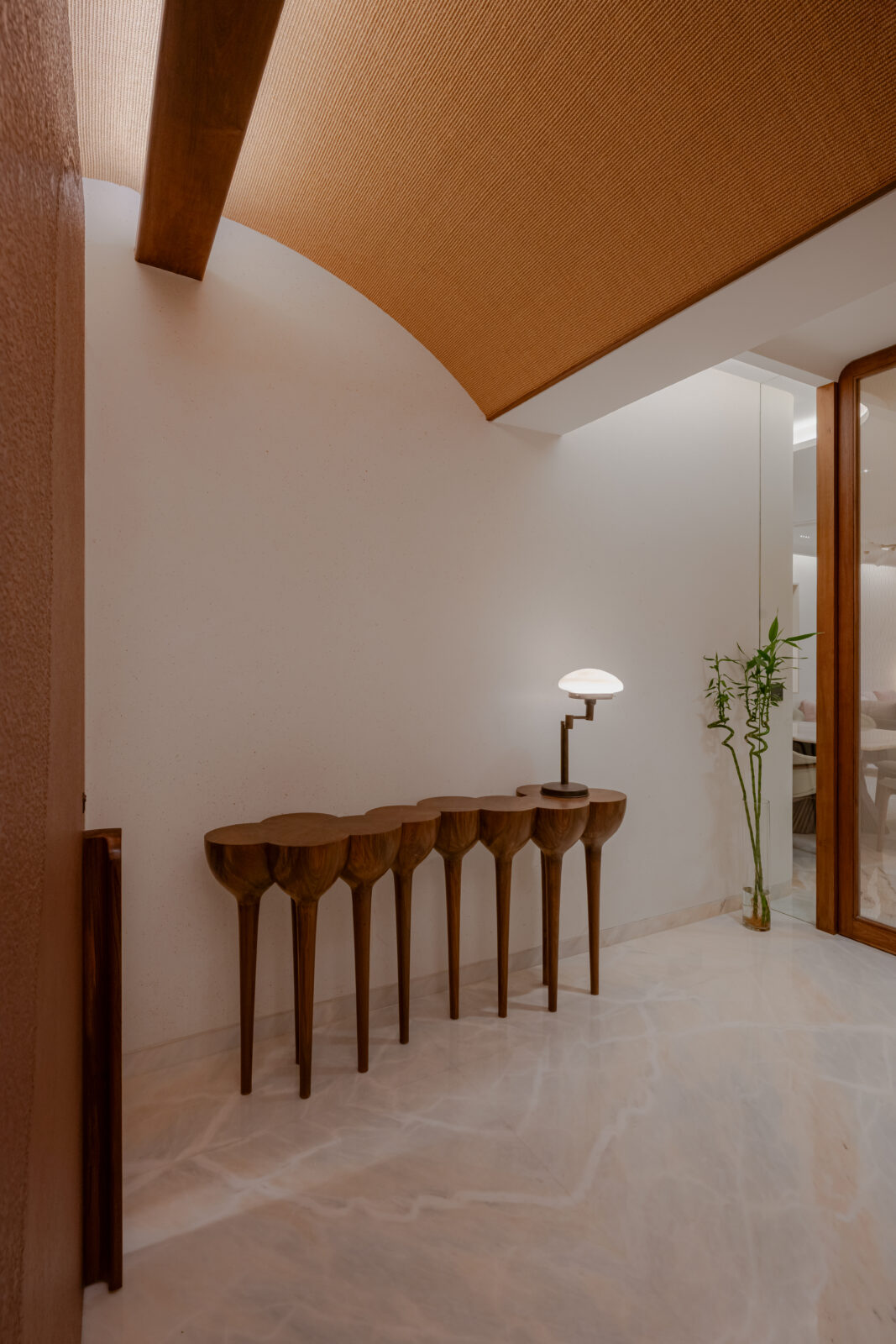
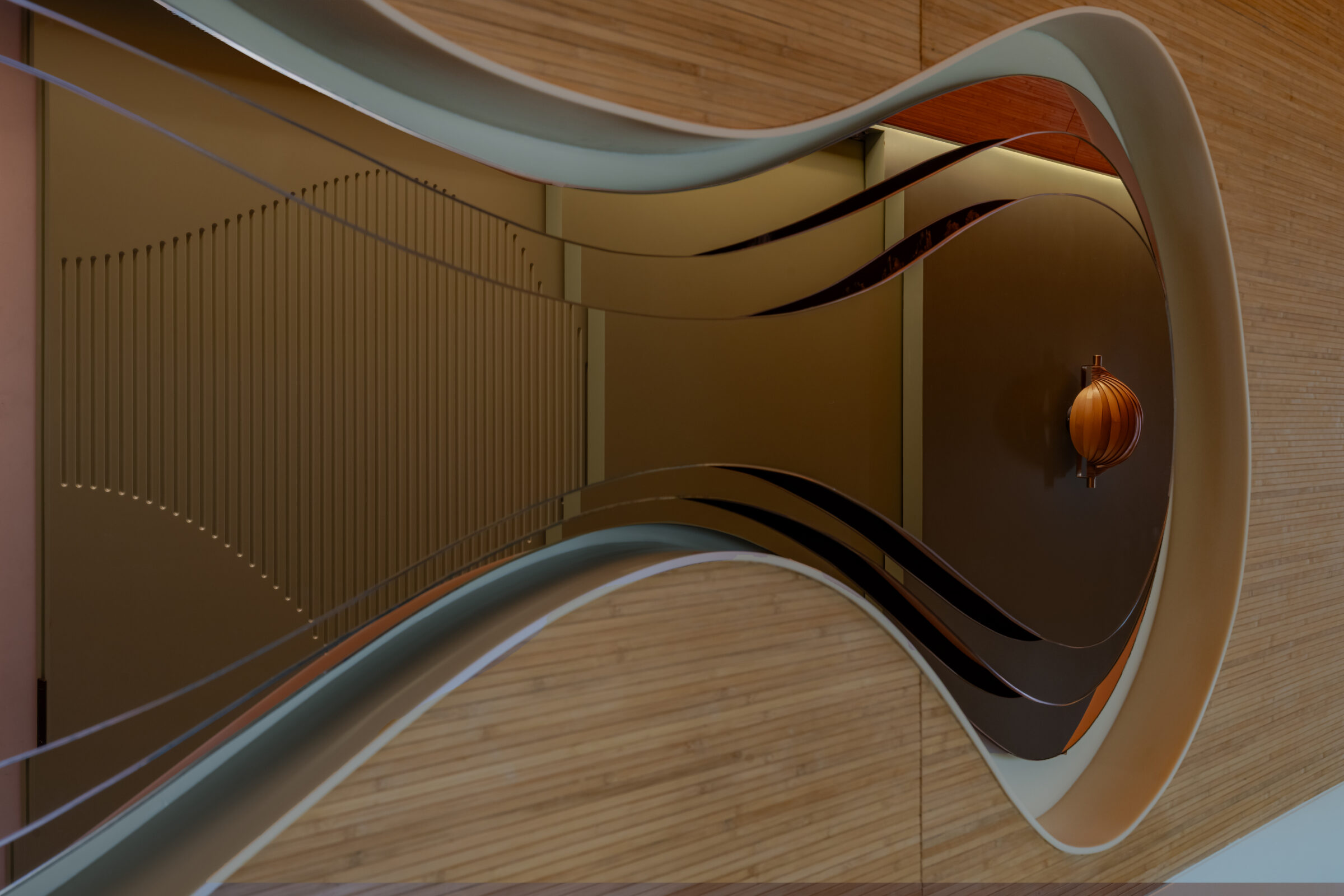
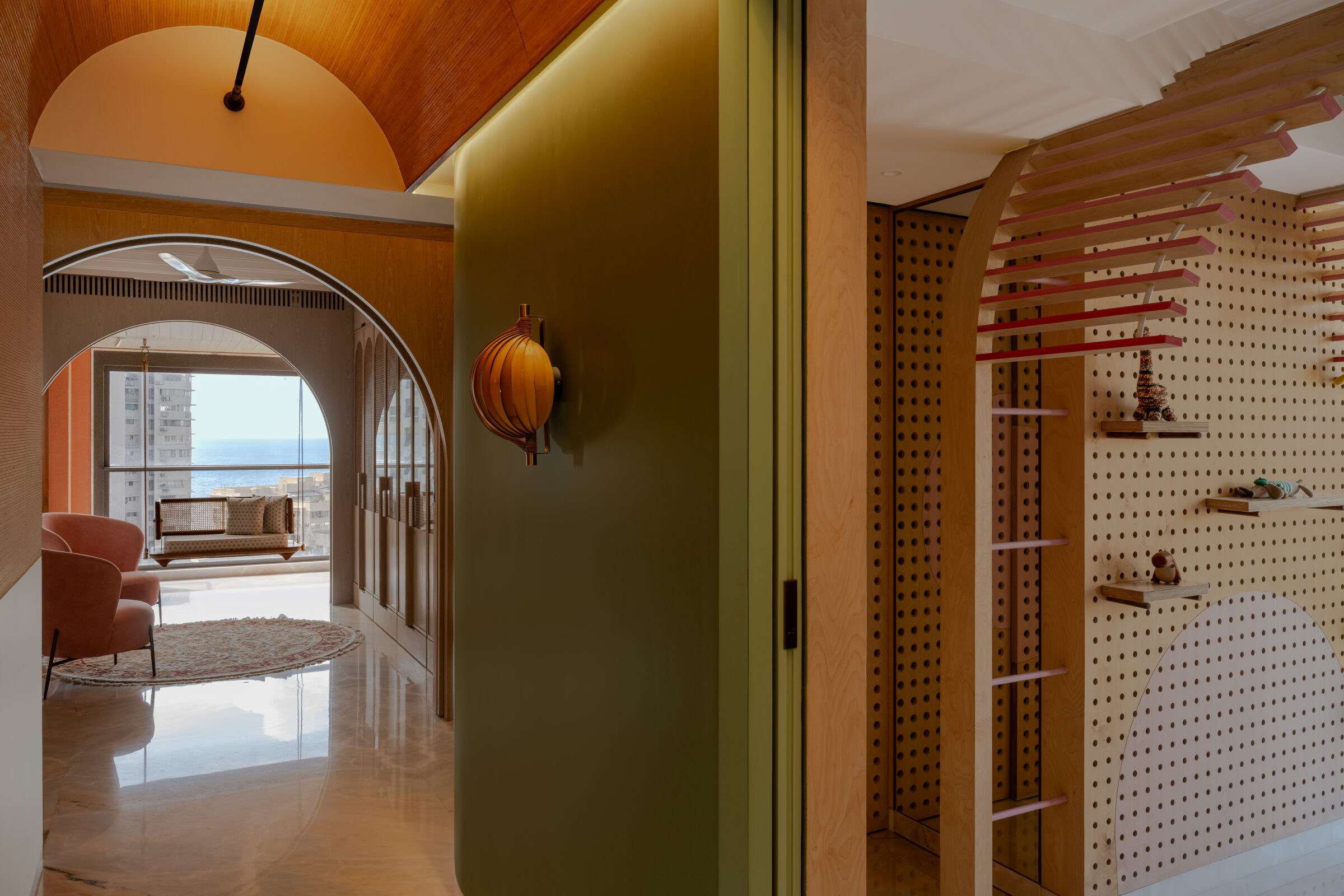
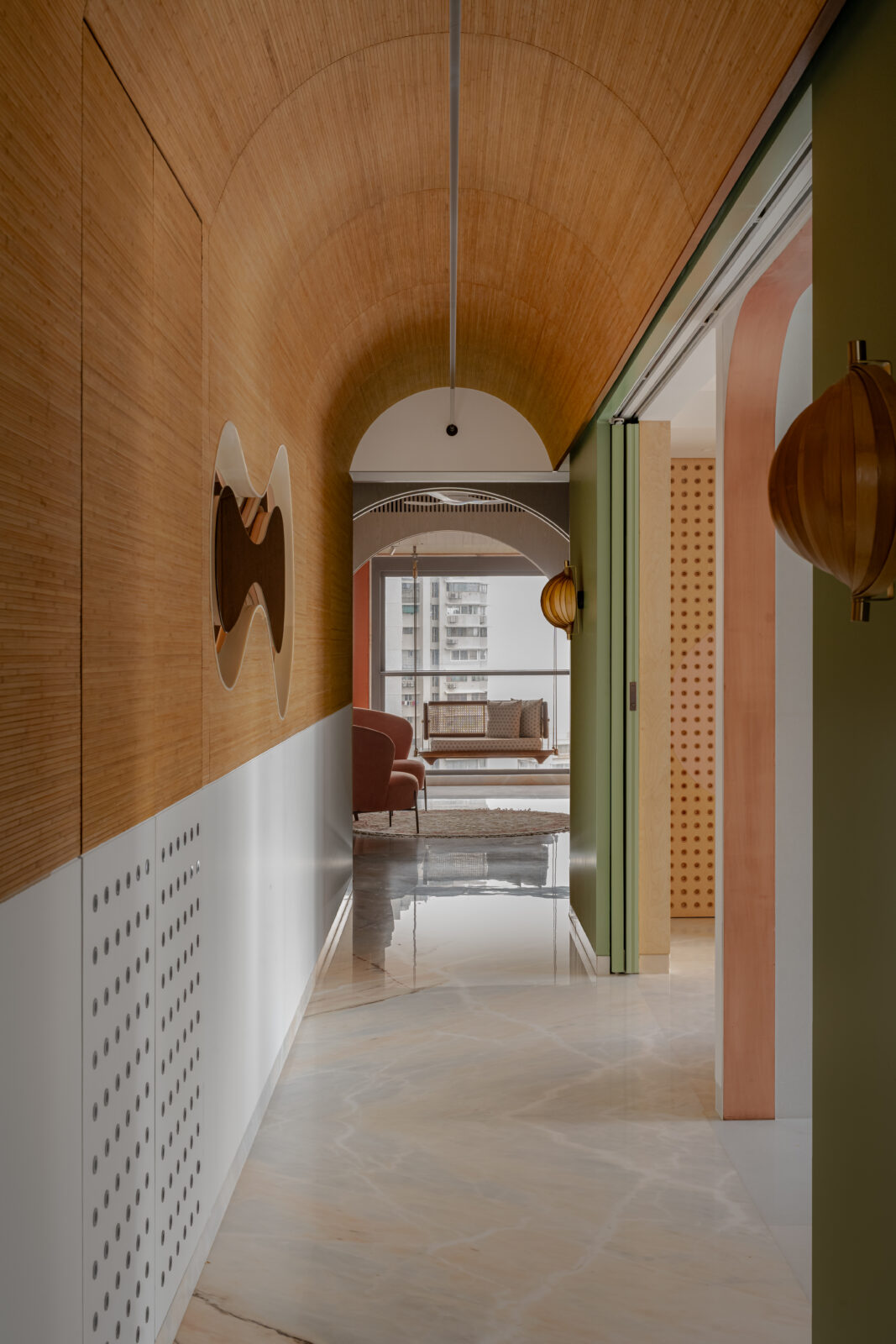
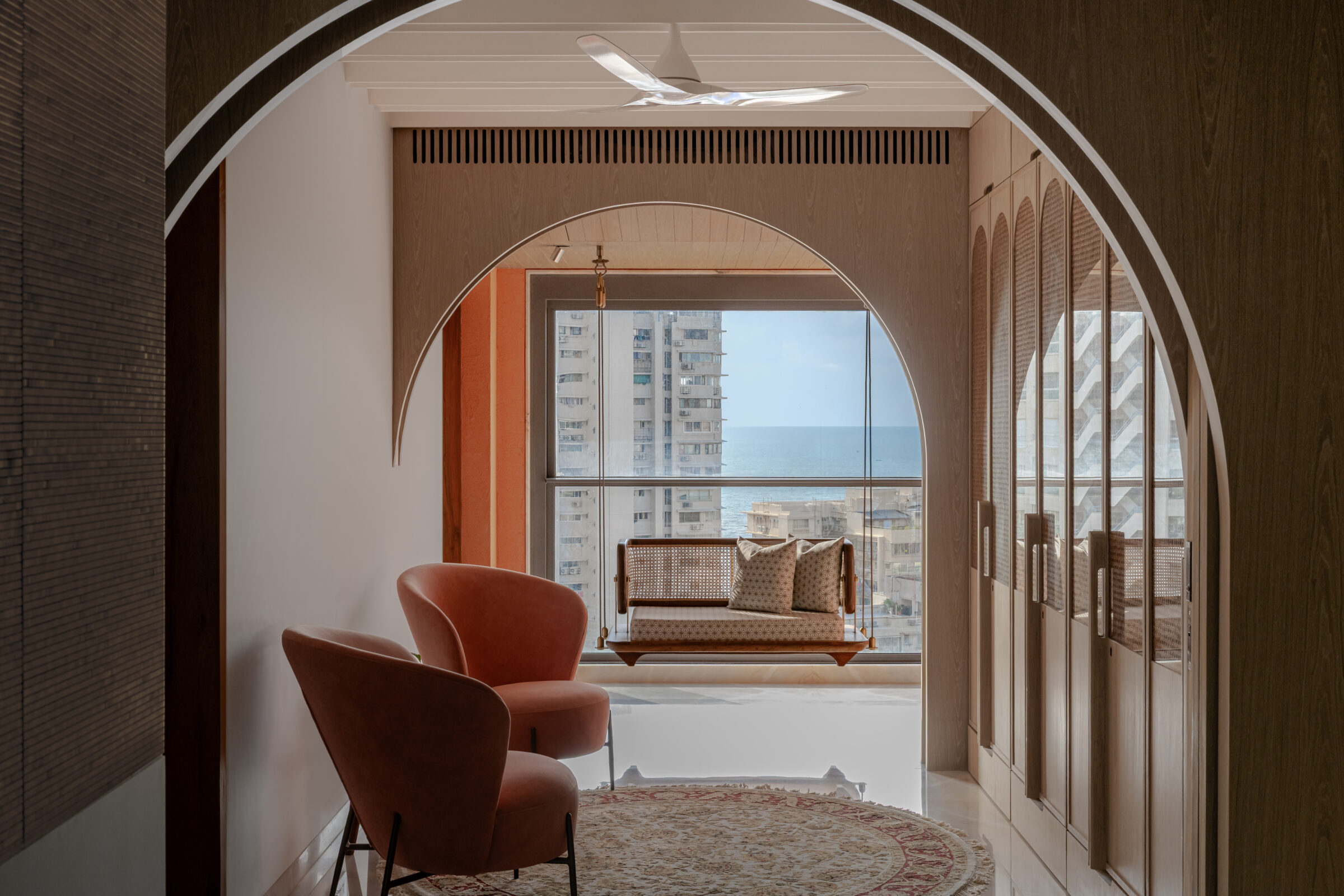
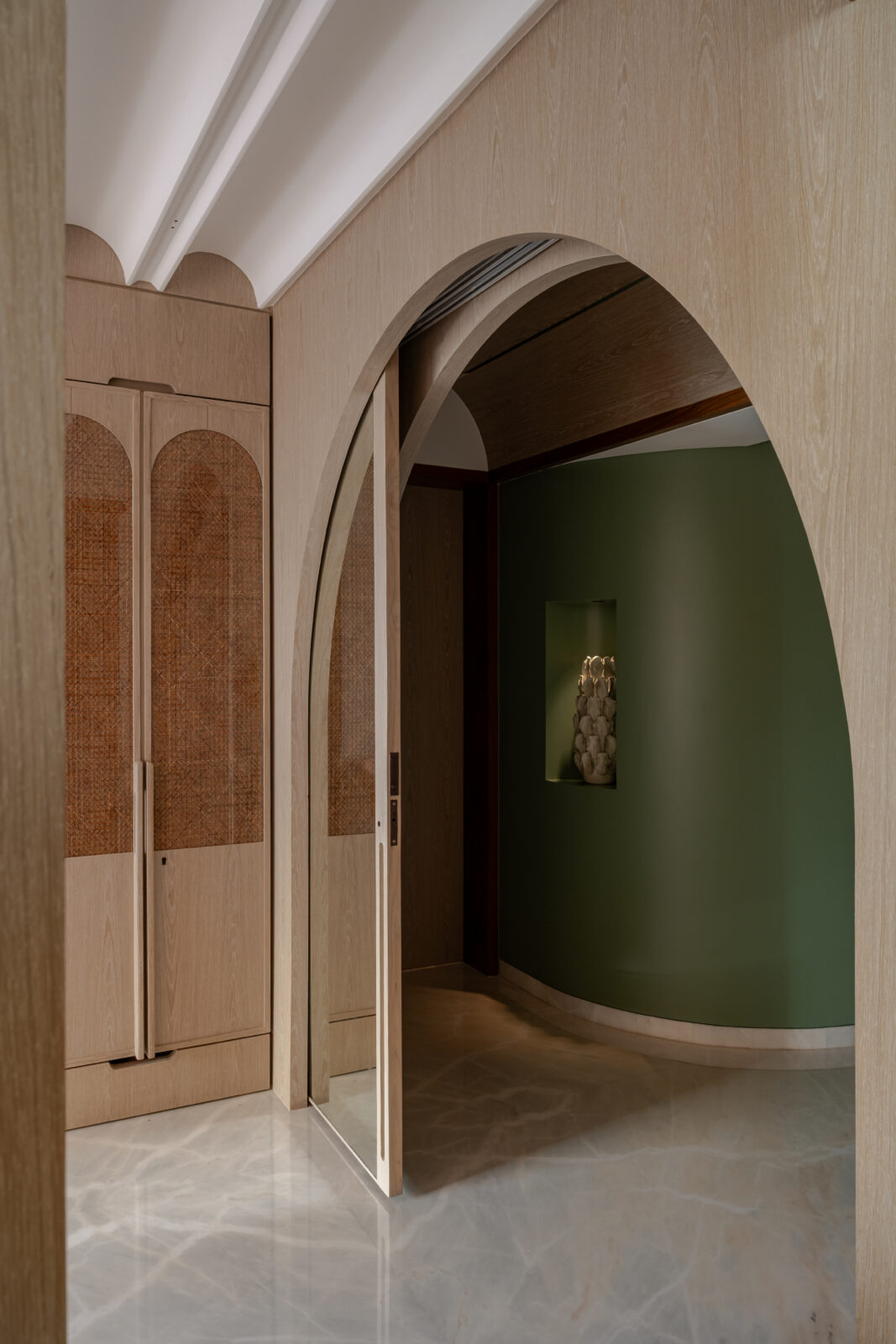
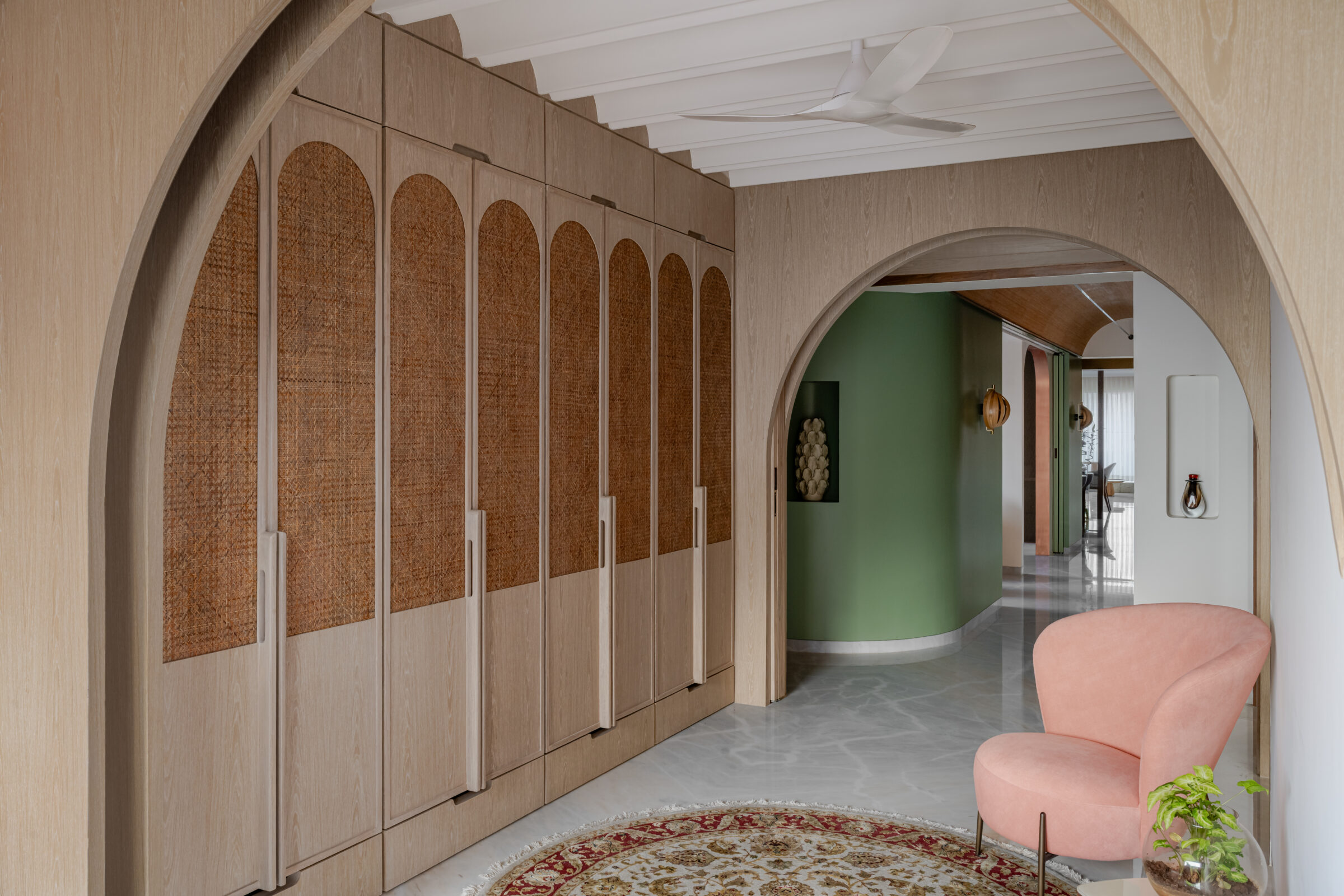
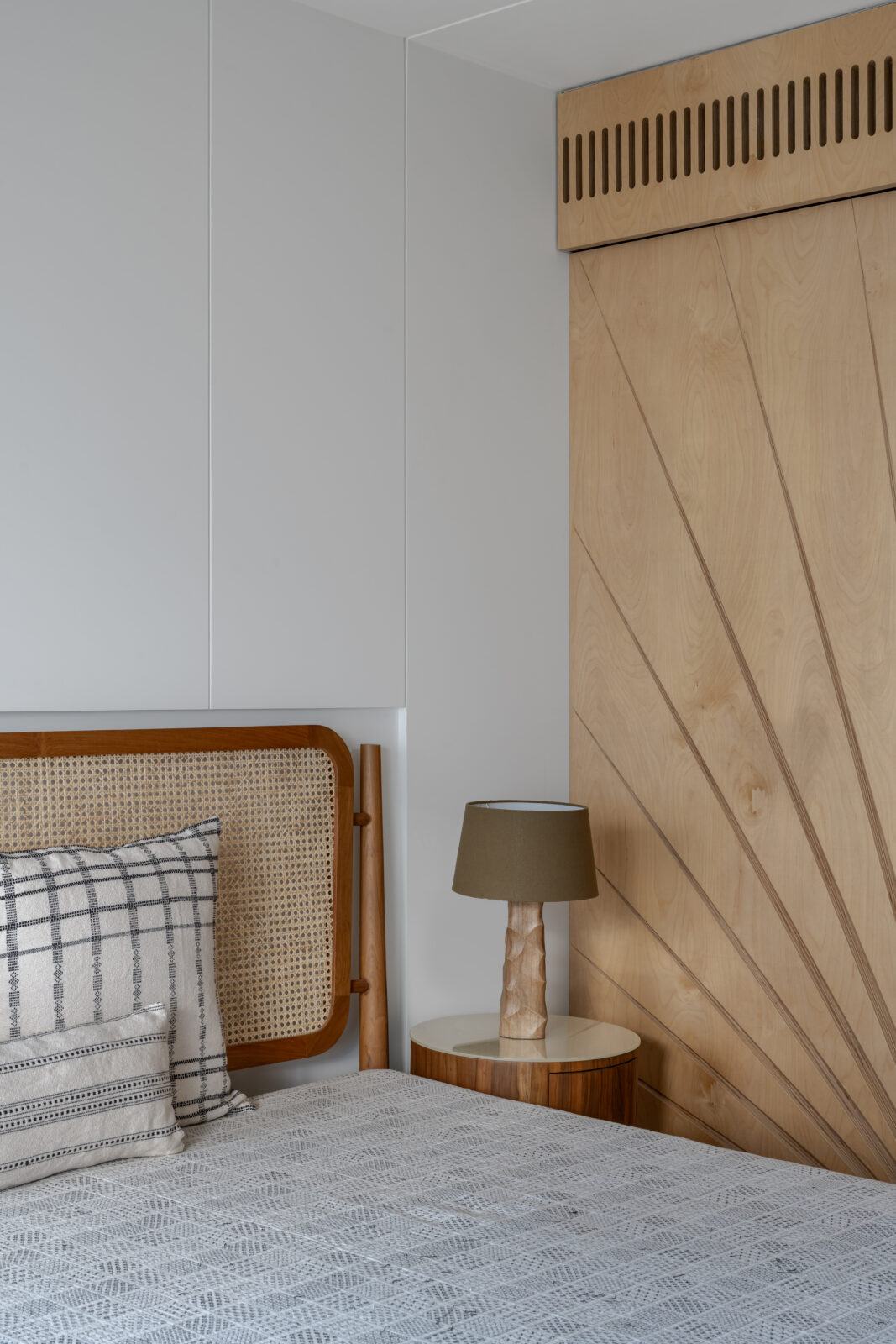
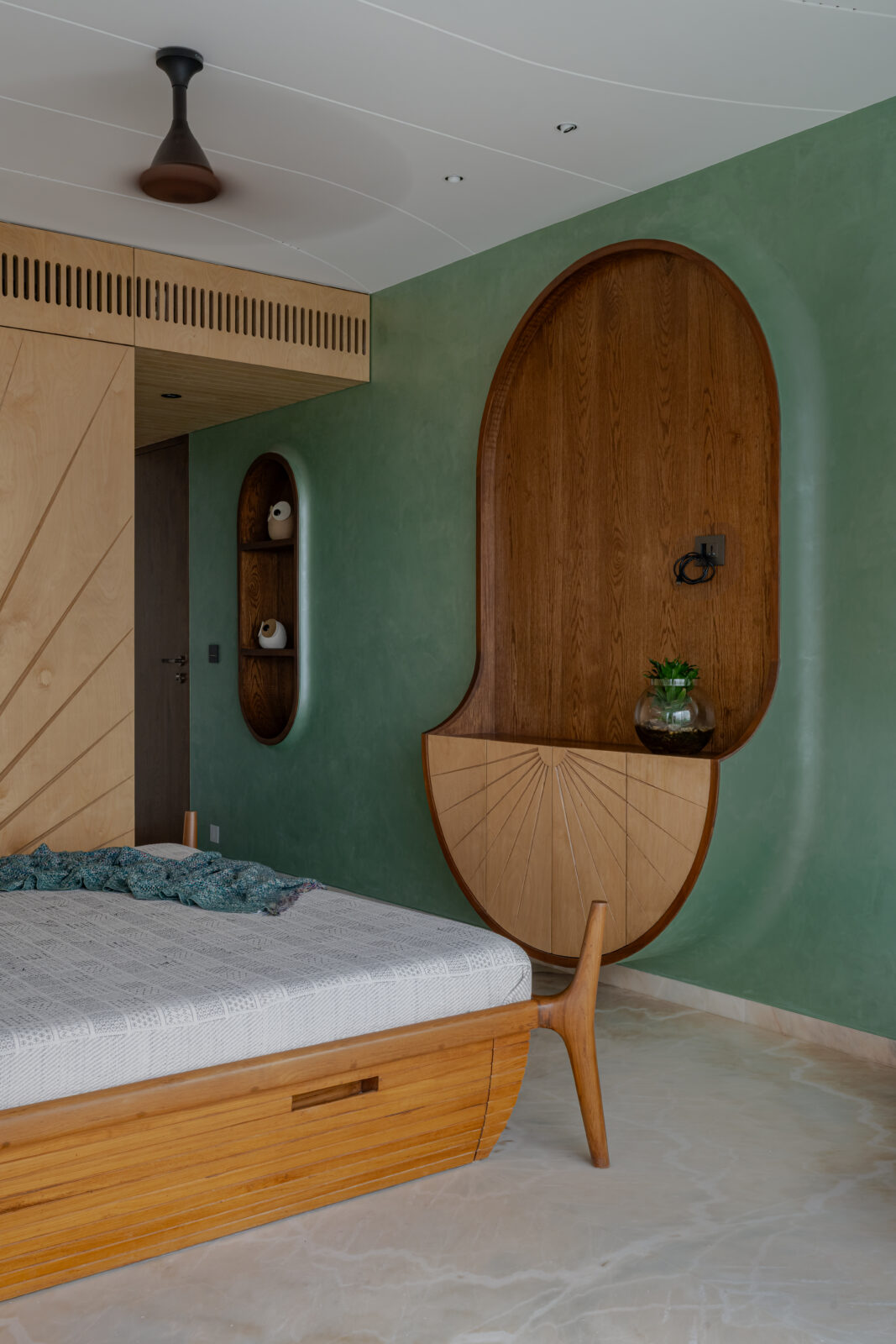
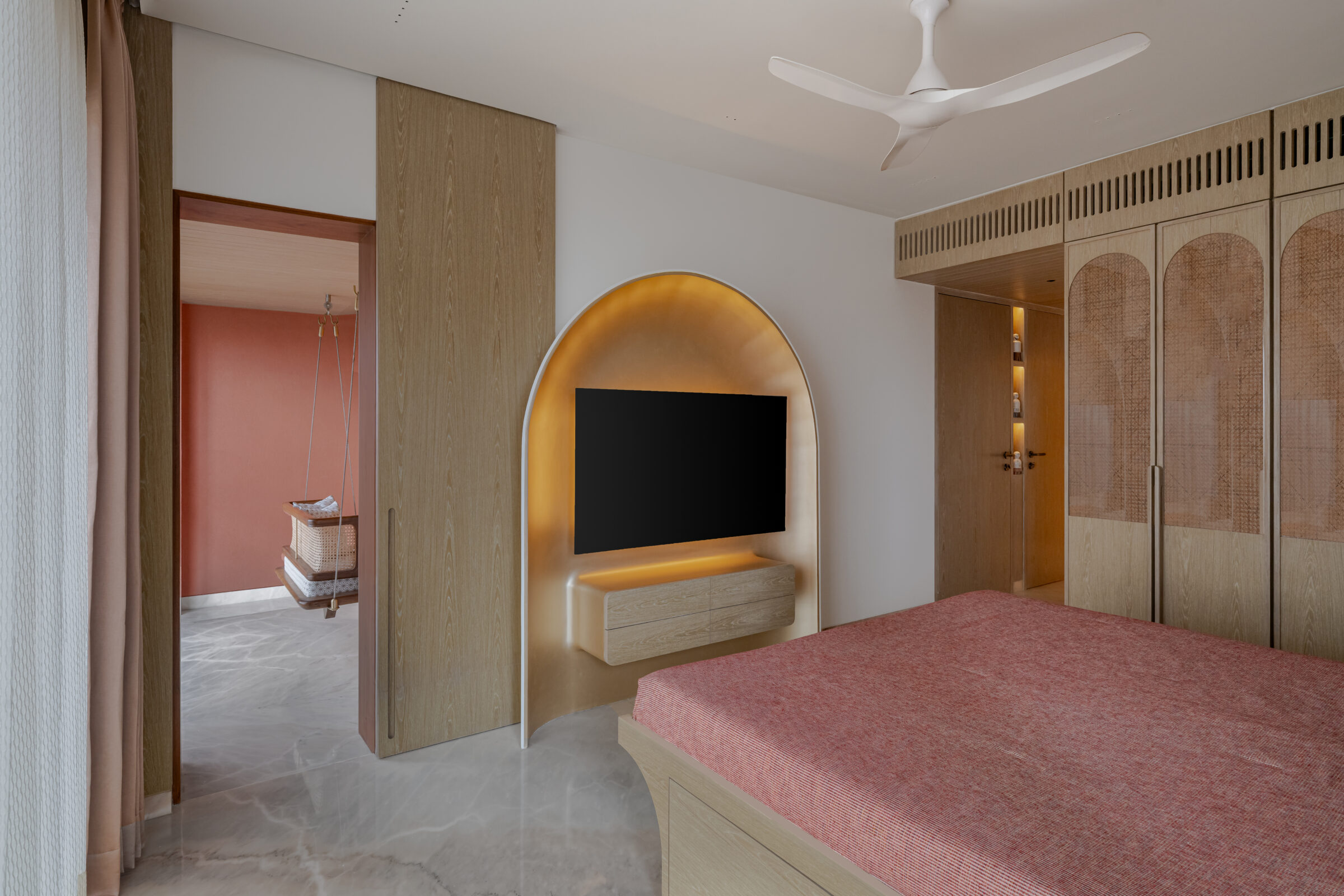
The entrance passage is typical to apartments of this type, that is to say: long and largely lightless. Our first gesture was to widen this at the entrance area to create the sense of a lobby, extending the vaulted sisal fiber ceiling from the private lift lobby into the home. It was also important to us to bring in daylight into the heart of the home. On the long side, this was achieved by opening up the kids’ room (for visiting grandchildren) and the derasar (Jain home temple) through sliding doors in gradients of green. At the end of the passage, we converted what was the smallest bedroom into a walk-in wardrobe for the master bedroom, but one that doubles up as a lounge area with sliding doors onto the passage, and two connections into the bedroom. This creates a space that can be used as a private sitting area for the master bedroom, but when opened up is available to all, and more importantly floods the passage with natural light and ensures cross ventilation through the home. The ceiling in the passage here is a continuation of the natural bamboo mat that clads the wall and vaults across the top.
In the lounge area we extended the depth of a balcony from 2’6” to 6’, allowing us to place a swing and render the space usable. A motorized vertical sliding window converts from full height glazing that turns into a handrail at the flip of a switch.
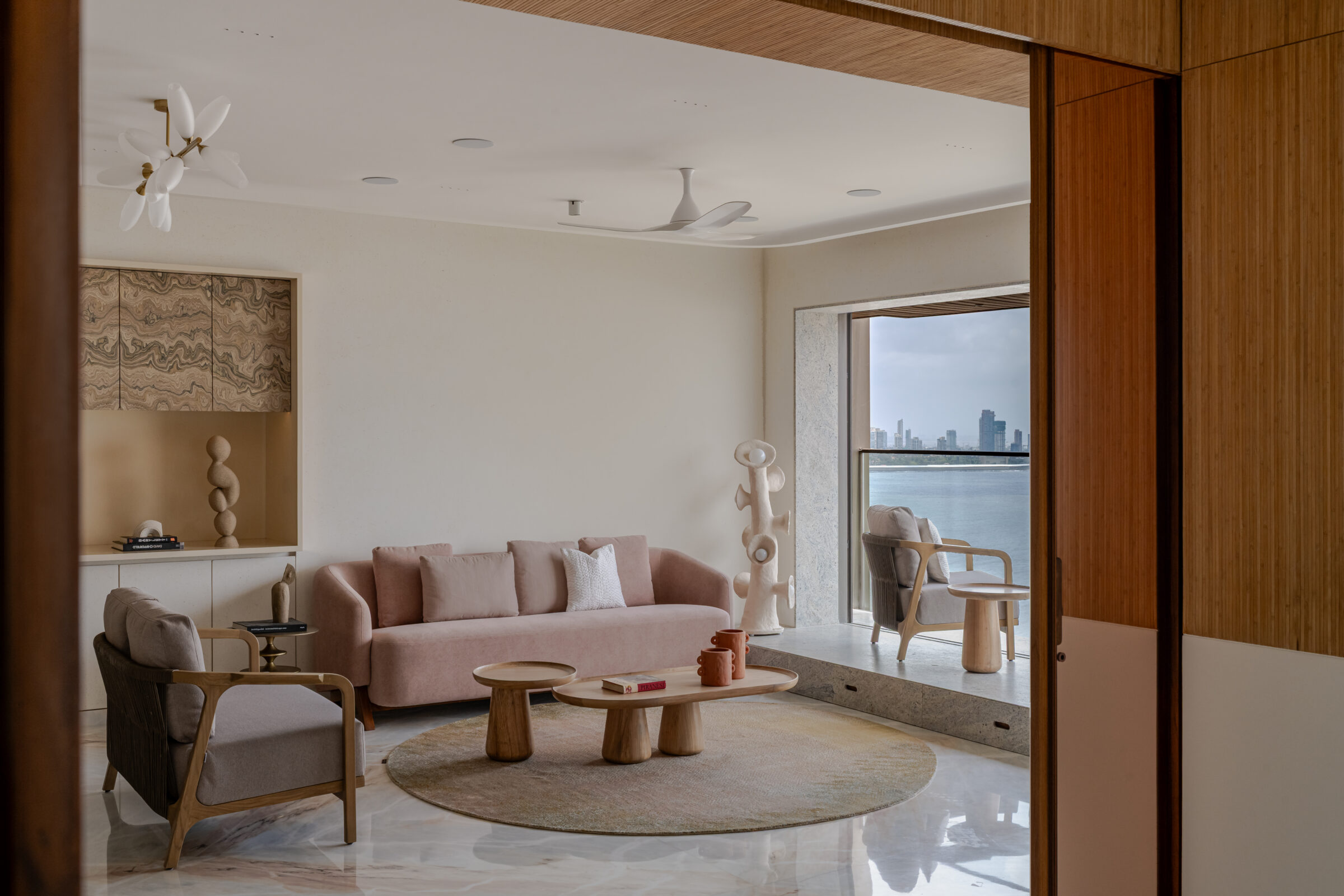
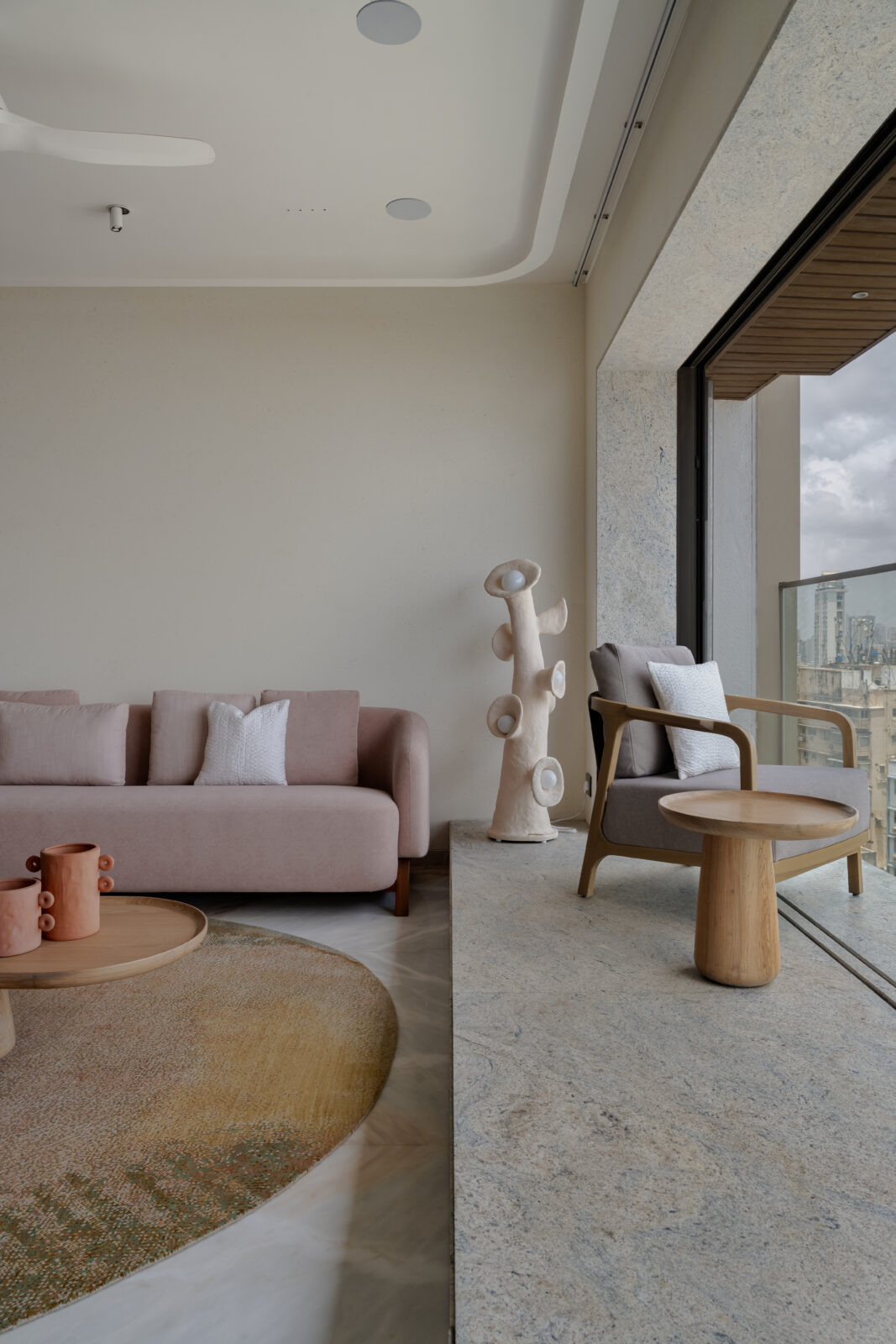
The living room too was fronted by a similar balcony of limited use, which we also extended into the home as a raised platform akin to the traditional otla, where cushions can be thrown to offer informal low seating. The track of the minimal sliding window was detailed to disappear into the floor, allowing visual continuity over the granite otla.
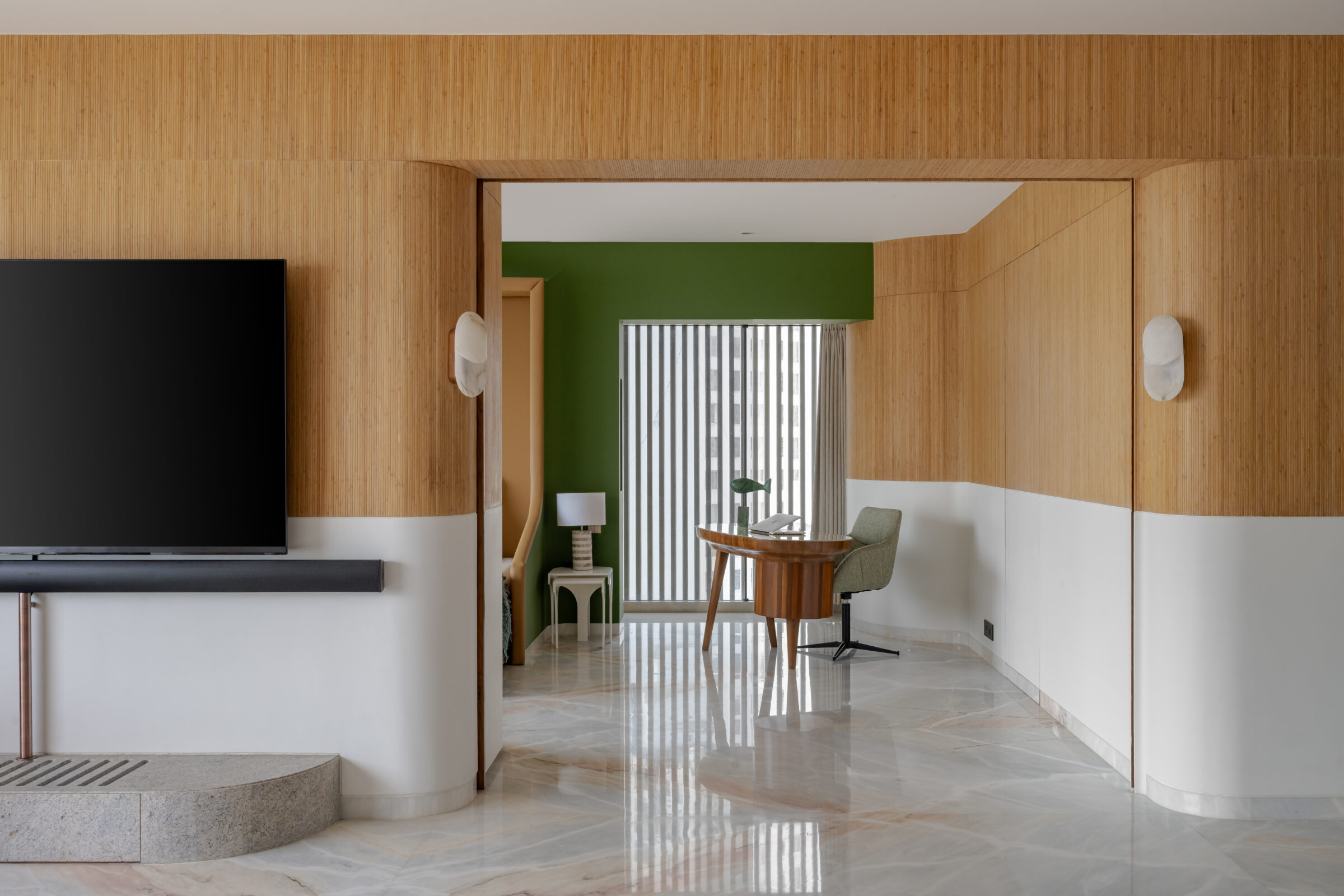
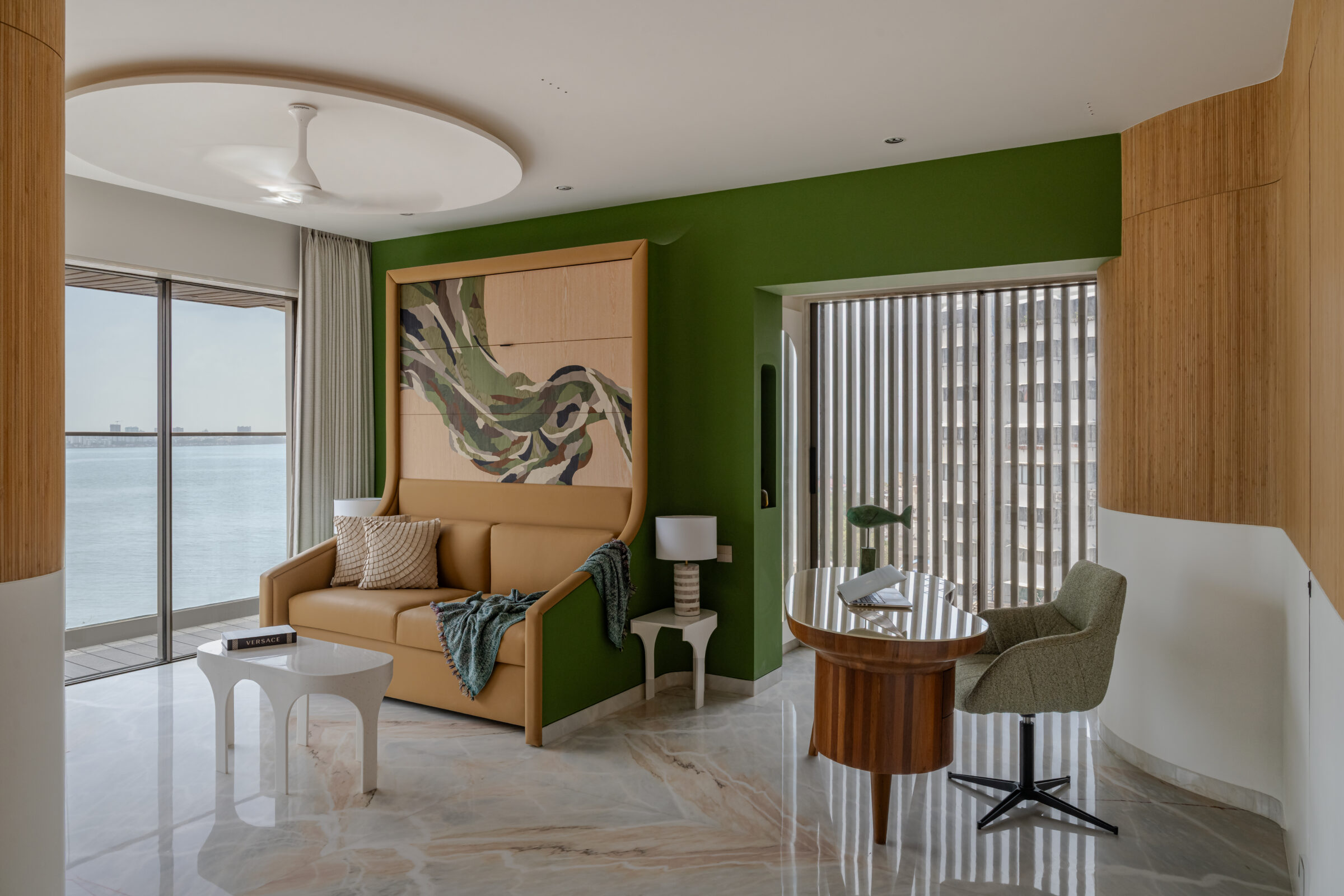
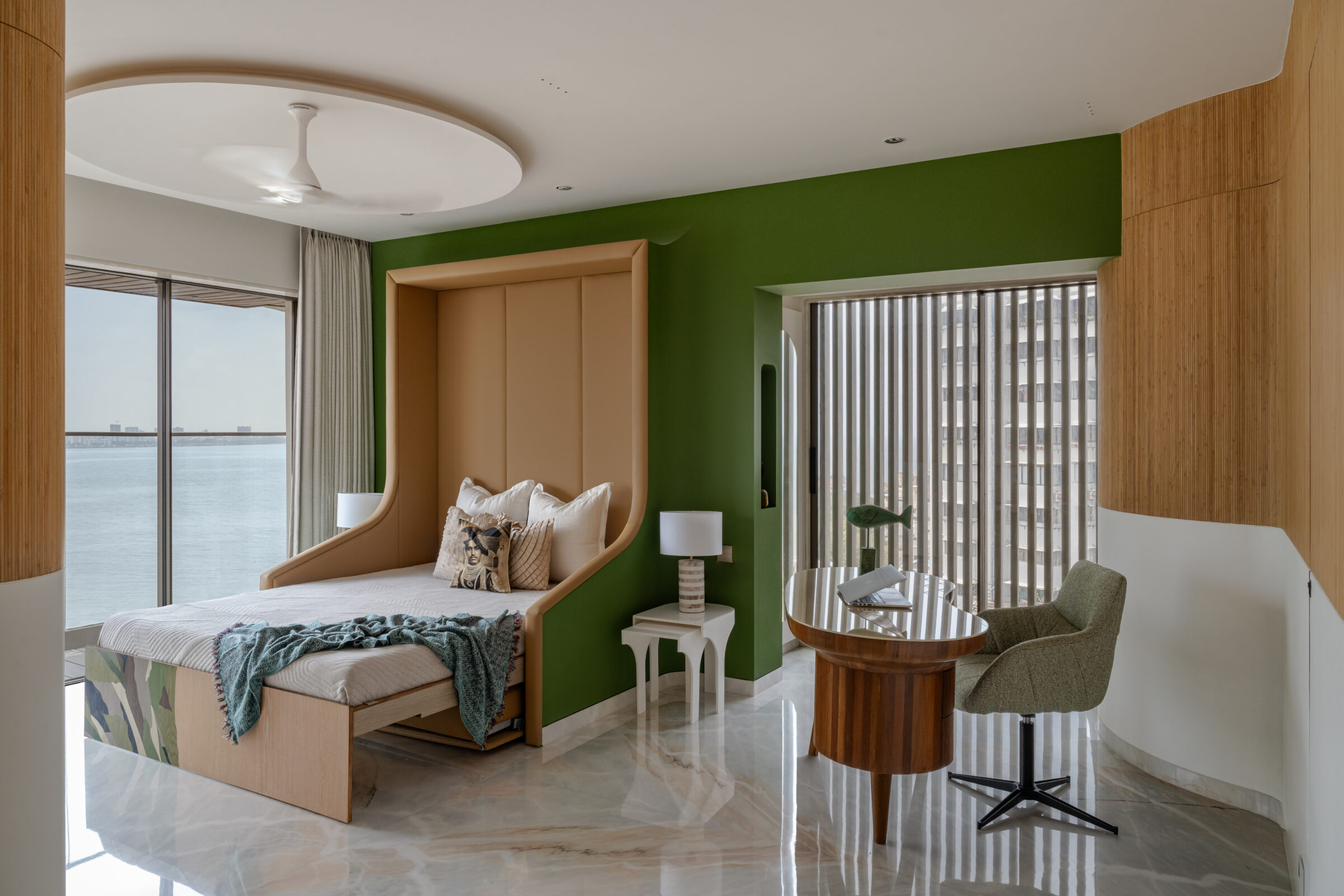
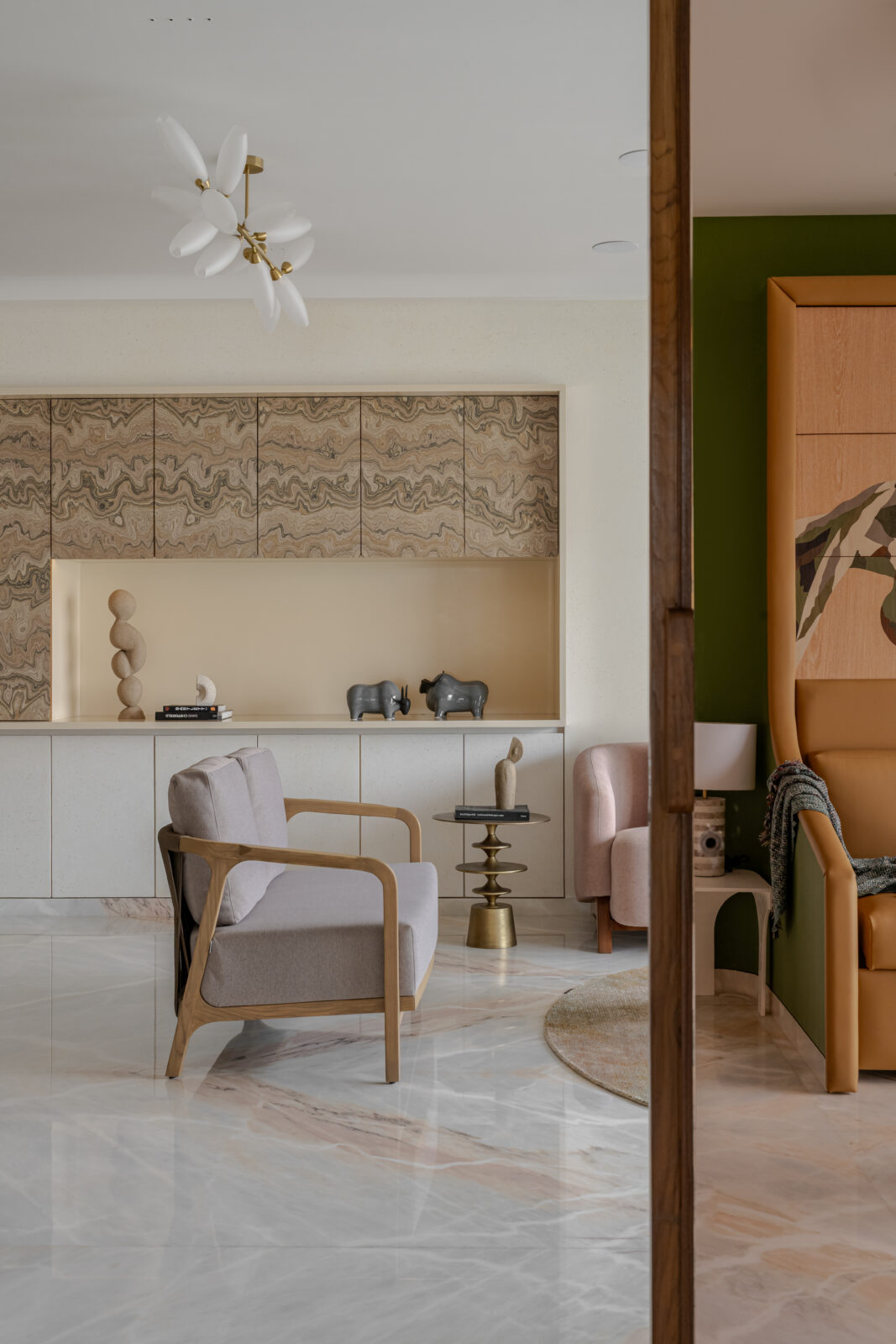
In the original plan, the fourth bedroom was accessed directly off of the living room. As this will be most rarely used, we conceived of it as a lounge/ extension of the living room. This we did by widening the opening between the spaces and softening the corners between them, providing an 8’ long sliding partition that disappears into a pocket wall. The finishes also tie the rooms together, not just the pink tinged marble flooring, but also the vertical bamboo mat cladding to the wall, within which doors are concealed. A leather sofa with veneer marquetry paneling above it folds into a drop down bed when needed for guests. Custom designed nesting tables in solid surface can quickly combine to become bedside and coffee tables.
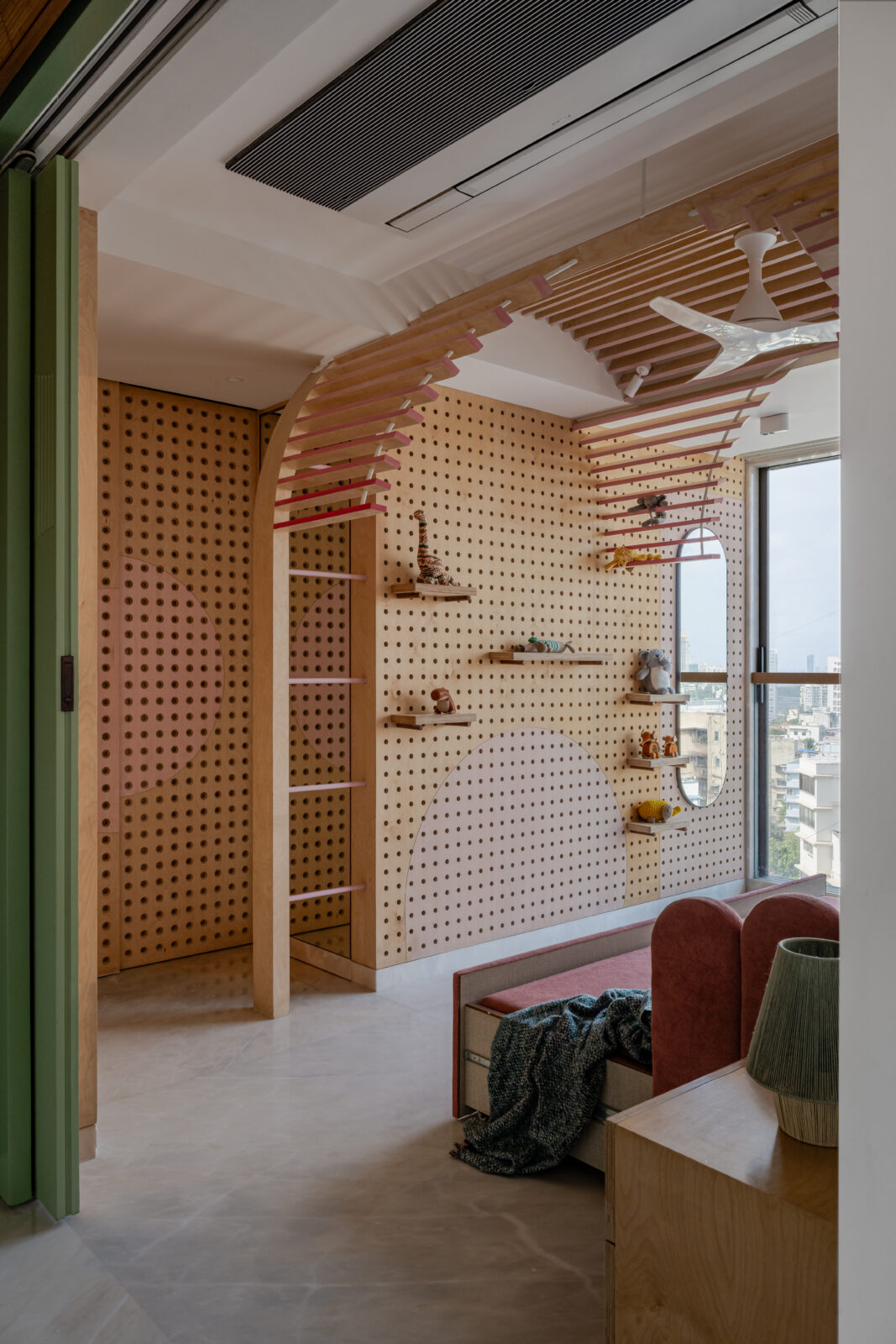
The children’s room features a peg board wall where floating shelves and a desk top can be moved around flexibly to accommodate the growth of its occupants. The ceiling is a playful pergola that is formed by two intersecting barrel vaults, a sort of arched jungle-gym with a ladder adjacent. A pull-out trundle bed tucks rolls away into a sofa, offering more floor space for play.
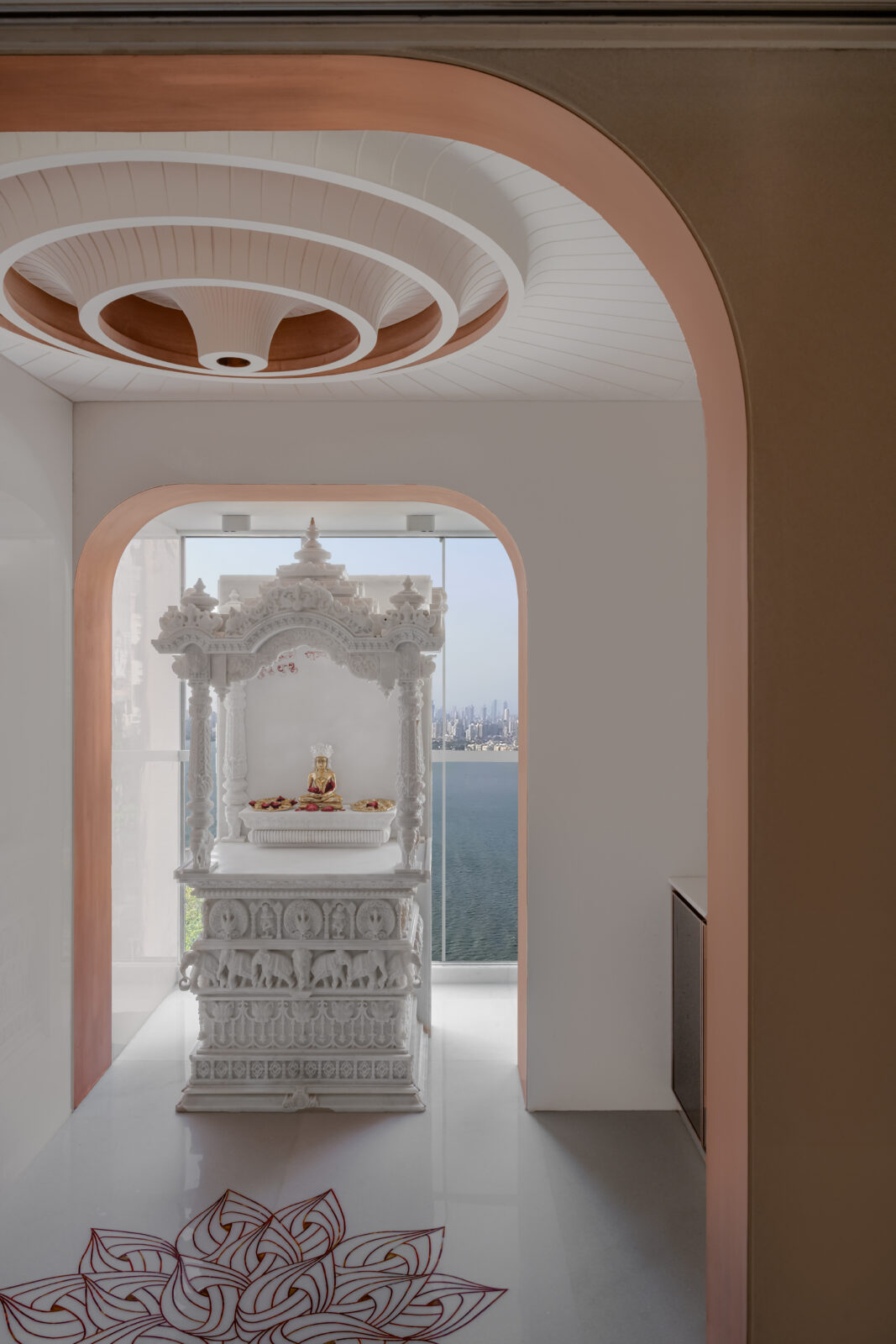
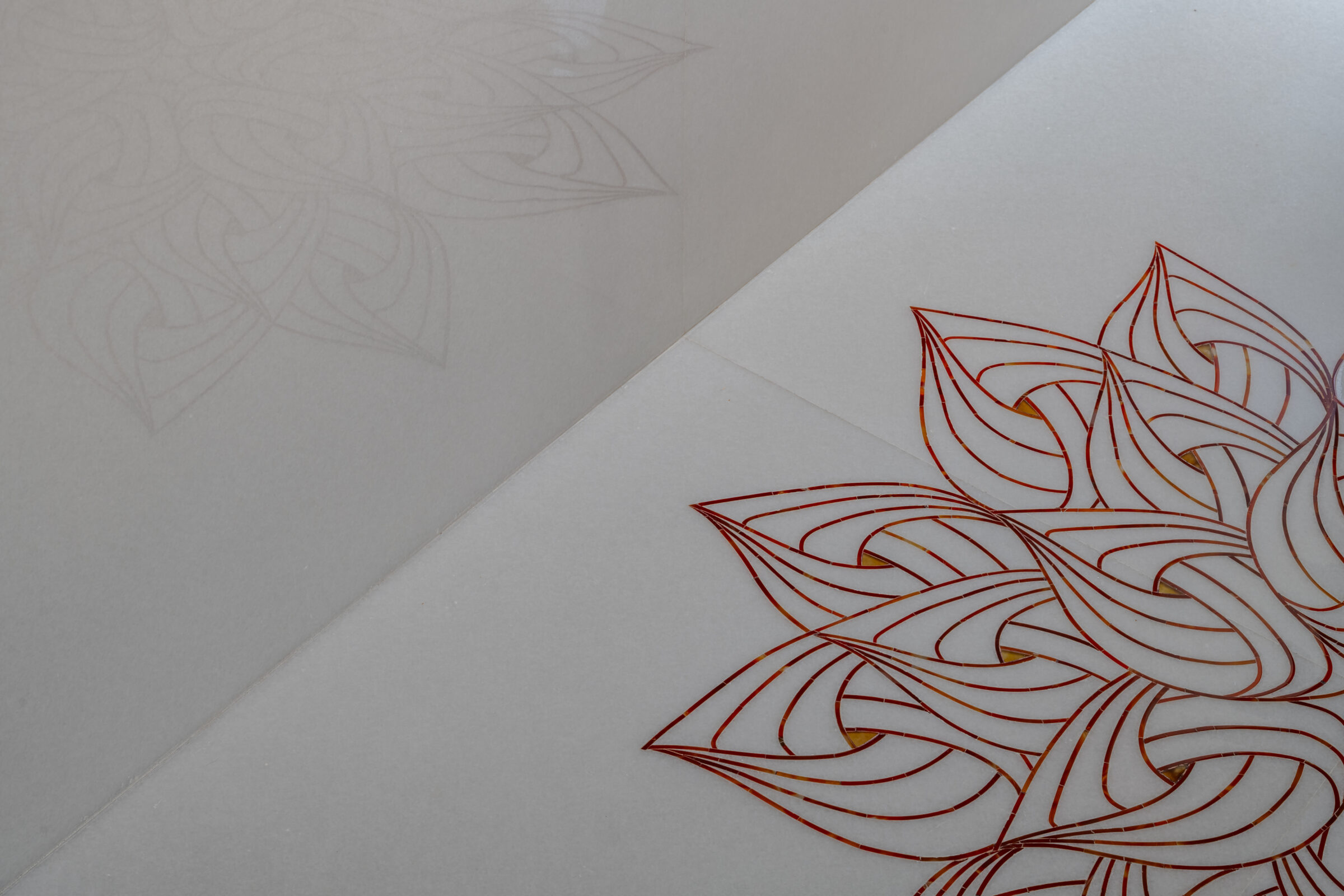
The derasar is a sacred space at the heart of the home, with walls and floor in spotless white marble. The mandir is the centre of focus here, foregrounded by an inlay of a geometric pattern in semi-precious stone in the floor. In the ceiling, concentric rings of copper, held within a stepped ceiling whose grooves accentuate the radial geometry.
Design Team: Pravir Sethi, Chintan Zalavadiya